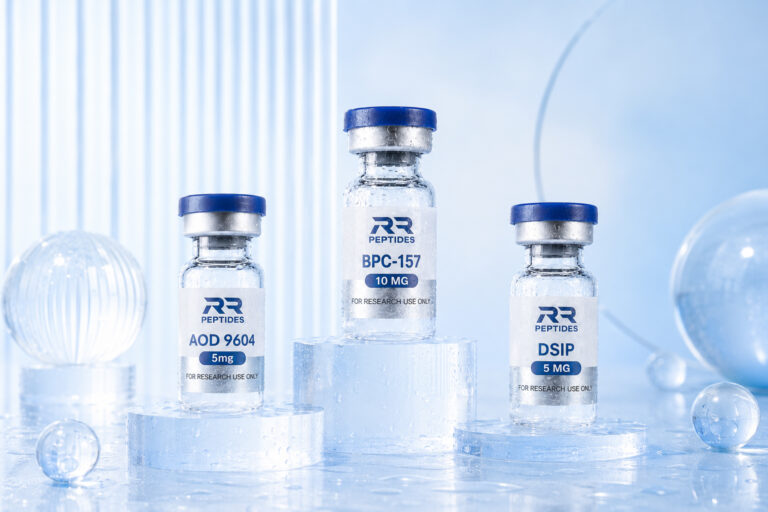
Interest in research peptides Canada continues to grow as laboratories study peptide structure, cellular signalling, and biochemical pathways. However, reliable research depends on peptide identity, purity, analytical documentation, and proper storage.
In Canada, regulatory context is also important. Health Canada notes that a “For Research Use Only” label does not automatically exempt unauthorized products from regulatory requirements.
Explore RR Peptides to learn more about research peptides, quality standards, and laboratory-focused peptide resources in Canada.
What Are Research Peptides in Canada?
Peptides are short chains of amino acids connected by peptide bonds. Depending on their sequence and structure, they may participate in cellular signalling, protein interactions, metabolic pathways, immune processes, or other biological functions.
In laboratory settings, research peptides Canada may be used as experimental materials to investigate these mechanisms under controlled conditions. Researchers may work with peptides in in vitro assays, biochemical experiments, cell-based studies, analytical method development, or preclinical research models.
Importantly, the term research peptide describes an intended research context; it does not establish that a product is authorized for therapeutic use. This distinction is especially important in Canada, where peptides marketed for human use may be subject to applicable Health Canada regulatory requirements.
Accordingly, laboratory research materials should not be presented as approved treatments, medicines, or products intended for self-administration.
Explore quality research peptides in Canada at RR Peptides
Common Applications of Research Peptides
Researchers use research peptides Canada to investigate specific molecular interactions, biological pathways, and cellular processes under controlled laboratory conditions. Because peptides have defined amino-acid sequences and structural characteristics, they can be useful tools for studying how particular molecules interact with receptors, enzymes, proteins, and cellular signalling systems.
Depending on the peptide and experimental model, research may examine a variety of cellular and tissue-related pathways. These can include cell migration, extracellular matrix activity, inflammatory signalling, angiogenesis, protein expression, and cellular repair mechanisms. By observing changes in these processes, researchers can gain a better understanding of how peptide structure may influence biological activity.
Peptides are also studied in metabolic and endocrine research, including pathways associated with hormone signalling, glucose metabolism, energy regulation, lipid metabolism, and mitochondrial activity. In addition, certain peptides may be used as reference materials, analytical standards, or experimental targets during laboratory method development and validation.
However, results can vary considerably depending on factors such as peptide concentration, experimental conditions, cell type, animal model, and study design. Findings from cell cultures, biochemical assays, or animal models do not necessarily translate directly to humans. Therefore, additional research and appropriate clinical validation are required before determining whether laboratory findings have clinical relevance.
How Research Peptide Quality Is Evaluated
When selecting research peptides in Canada, researchers should evaluate several characteristics rather than treating a stated purity percentage as the only measure of quality.
Identity is one of the first considerations. Analytical testing should provide evidence that the material corresponds to the expected peptide sequence or molecular characteristics.
Purity is another important parameter. Peptide synthesis can generate truncated sequences, deletion products, residual reagents, or other process-related impurities. Therefore, researchers need analytical information that helps characterize the sample.
Batch consistency is equally relevant. Significant differences between lots may introduce unwanted experimental variability and make results more difficult to reproduce.
Finally, laboratories should consider traceability. Batch or lot identification allows analytical documentation to be associated with the specific material used in an experiment.
Together, these factors help researchers determine whether a peptide is sufficiently characterized for the intended laboratory application.
Purity Testing and Certificates of Analysis
Purity Testing and Certificates of Analysis
A Certificate of Analysis (COA) provides analytical information associated with a specific peptide batch or lot. When evaluating research peptides Canada, researchers should review the actual testing methods, reported results, and batch information rather than assuming that the presence of a COA alone guarantees quality or complete characterization.
A COA can help researchers understand what characteristics of a peptide sample were evaluated. However, the usefulness of the document depends largely on the scope of testing, analytical methods used, and clarity of the reported data.
What Information Should a Peptide COA Include?
The exact content of a COA can vary depending on the laboratory and the tests performed. In general, researchers may look for information such as:
Peptide or compound name
Batch or lot number
Reported purity
Analytical methods used
Molecular mass or identity data
Testing date
Chromatographic results
Mass spectrometry results
Laboratory or testing information
Importantly, the batch or lot number on the COA should correspond to the material being evaluated. Without a clear connection between the analytical report and the specific batch, it may be difficult to determine whether the results accurately represent that particular research sample.
HPLC and Peptide Purity
High-performance liquid chromatography (HPLC) is one of the most commonly used analytical techniques for evaluating the purity of research peptides Canada. During HPLC analysis, components within a sample are separated based on their interactions with the chromatographic system. The resulting chromatogram displays peaks representing detectable components under the specific analytical conditions used.
Researchers evaluating research peptides Canada can use this information to estimate the relative chromatographic purity of a peptide sample and identify the presence of additional detectable components. For example, a dominant peak may represent the primary component, while smaller peaks may indicate synthesis-related impurities, degradation products, or other compounds present in the sample.
However, an HPLC purity percentage should always be interpreted within the context of the analytical method and testing conditions. Even when assessing research peptides Canada, a high reported HPLC purity value does not independently establish the complete molecular identity, sterility, or overall characterization of a peptide sample.
Mass Spectrometry and Peptide Identity
Mass spectrometry (MS) provides a different type of analytical information when evaluating research peptides Canada. Rather than primarily assessing chromatographic purity, MS measures mass-related characteristics that can help determine whether a detected compound is consistent with the expected molecular mass of a particular peptide.
This makes mass spectrometry particularly useful for supporting peptide identity. When HPLC and MS are used together to evaluate research peptides Canada, researchers gain complementary analytical information: HPLC provides data about sample composition and relative purity, while MS provides evidence related to molecular mass and identity.
In simplified terms:
HPLC → Sample Composition and Purity Mass Spectrometry → Molecular Mass and Identity Support
However, neither analytical method should automatically be viewed as complete characterization on its own. When assessing research peptides Canada, researchers should consider HPLC and MS results alongside other relevant batch documentation and analytical data to develop a more complete understanding of the material.
Why a High Purity Percentage Is Not Enough
A common mistake when evaluating research peptides Canada is focusing exclusively on the headline purity percentage. For example, a reported HPLC purity of 99% describes a particular analytical measurement under specified testing conditions. It does not necessarily mean that every relevant characteristic of the material has been evaluated.
A high HPLC purity result does not by itself confirm:
Sterility
Endotoxin levels
Correct molecular identity
Absence of all contaminants
Peptide concentration or quantity
Stability under different storage conditions
Suitability for human administration
These characteristics require separate analytical, microbiological, or other appropriate testing methods. Therefore, researchers should avoid interpreting chromatographic purity as a universal measurement of peptide quality.
Evaluating the Complete Analytical Picture
When reviewing a COA, researchers should consider what was tested, how it was tested, and which batch the results represent. Supporting information such as chromatograms and mass spectra can provide additional context beyond a simple summary value.
For laboratory research, evaluating several forms of analytical evidence can provide a more complete picture of a peptide sample than relying on a single number. Purity, identity, batch traceability, and analytical documentation answer different questions, and each can contribute to understanding the characteristics of the research material.
Ultimately, a COA should be treated as a summary of the analyses actually performed—not as a universal guarantee of quality. Careful interpretation of the methods and results allows researchers to better determine whether a peptide has been appropriately characterized for its intended experimental context.
Explore quality research peptides in Canada at RR Peptides
Storage and Handling of Research Peptides
Even well-characterized research peptides Canada can undergo physical or chemical changes when stored or handled incorrectly. Peptide stability may be influenced by several environmental factors, including temperature, moisture, oxygen exposure, light, contamination, pH, and repeated temperature fluctuations. Because different peptide sequences have different chemical and structural properties, their stability profiles can also vary significantly.
For this reason, laboratories working with research peptides Canada should follow peptide-specific storage documentation and established laboratory protocols rather than assuming that every research peptide requires identical conditions. Appropriate storage and handling help maintain sample integrity and reduce avoidable variability during laboratory experiments.
Factors That Can Affect Peptide Stability
The amino-acid sequence of a peptide plays an important role in determining how it responds to environmental conditions. Certain amino-acid residues may be more susceptible to chemical changes such as oxidation, hydrolysis, or other degradation processes.
Several factors may influence the stability of research peptides Canada, including:
Temperature: inappropriate or fluctuating temperatures may accelerate certain degradation processes.
Moisture: exposure to unnecessary humidity can affect some peptide materials, particularly during storage.
Light exposure: light-sensitive compounds may undergo chemical changes when exposed for extended periods.
Oxygen: oxidation can affect susceptible amino-acid residues and potentially alter peptide properties.
pH and solvent conditions: peptides may behave differently depending on the chemical environment in which they are studied.
Contamination: improper laboratory handling can introduce unwanted materials that affect sample integrity.
The significance of each factor depends on the specific peptide, formulation, and experimental conditions.
Lyophilized Peptides and Laboratory Solutions
Many research peptides Canada are supplied in a lyophilized, or freeze-dried, form. Lyophilization removes much of the water from the material and can help improve stability during appropriate storage. However, lyophilized peptides should still be protected from unnecessary moisture, environmental exposure, and temperature fluctuations according to compound-specific documentation.
Once a peptide is prepared in solution for laboratory experiments, its stability profile may change. Factors such as peptide sequence, solvent composition, concentration, pH, temperature, and storage duration can influence the characteristics and stability of the material.
Therefore, researchers should avoid applying a universal storage timeline to all peptide solutions. Instead, available stability data, supplier documentation, and validated laboratory procedures should guide preparation and storage decisions.
Reducing Variability Through Proper Handling
Consistent handling practices are particularly important when laboratories conduct experiments involving research peptides Canada. Differences in sample preparation, storage, or handling may introduce variables that affect experimental results.
Good laboratory practice may include:
Maintaining accurate batch, lot, and sample records
Recording relevant storage conditions throughout the study
Minimizing unnecessary freeze-thaw cycles where stability data indicate they may be problematic
Using appropriate clean laboratory techniques to reduce contamination risks
Following validated protocols for peptide preparation and handling
Clearly labeling samples with relevant identification and preparation information
Monitoring storage equipment according to laboratory procedures
These practices improve traceability and can help researchers determine whether unexpected experimental results may be associated with sample handling or storage conditions.
Why Storage Conditions Matter for Research Quality
Proper storage is not simply a logistical consideration when working with research peptides Canada. Degradation, contamination, or unintended chemical modification can change the composition of experimental material, potentially affecting molecular interactions and measured experimental responses.
If samples are exposed to inconsistent conditions, researchers may also introduce additional variability between experiments. This can make results more difficult to interpret, compare, or reproduce.
For this reason, storage and handling should be considered part of the broader quality-control process for research peptides Canada. Combining appropriate analytical characterization with documented storage conditions, careful sample handling, and consistent laboratory procedures can help preserve sample integrity and support more reliable and reproducible research results.
Research peptides Canada are used in controlled laboratory studies involving molecular signalling, receptor interactions, cellular pathways, metabolism, biochemical assays, and preclinical research. Their specific applications depend on the peptide and experimental design.
How can researchers evaluate peptide quality?
Researchers can examine peptide identity, analytical purity, batch documentation, traceability, testing methods, and storage information. HPLC and mass spectrometry are commonly used analytical tools, although the required testing depends on the research application.
Does 99% purity mean a peptide is suitable for every experiment?
No. For research peptides Canada, a reported purity percentage represents only one aspect of quality. Researchers should also consider identity, contaminants, residual solvents, endotoxins, sterility, and other relevant parameters depending on the experiment.
What should researchers look for in a peptide COA?
For research peptides Canada, a useful COA should identify the peptide and batch, report analytical results, and specify the testing methods used. The documentation should correspond to the actual batch supplied rather than a generic example.
Are research peptides approved for human use in Canada?
A research designation does not authorize a product for human use. For research peptides Canada, Health Canada states that a “For Research Use Only” label does not exempt unauthorized products from applicable regulations. Authorized prescription drugs in Canada carry an eight-digit Drug Identification Number (DIN).
Final Thoughts
Reliable peptide research starts with well-characterized materials and controlled laboratory practices. For researchers evaluating research peptides Canada, important considerations include verified identity, analytical purity, batch-specific documentation, appropriate storage, and clear traceability.
At the same time, researchers should maintain a clear distinction between experimental materials and authorized therapeutic products. Recent Health Canada enforcement has reinforced the importance of appropriate regulatory compliance.
By prioritizing transparent analytical documentation and responsible laboratory practices, researchers can improve the consistency and reliability of their studies. Explore laboratory-focused research peptides and resources at RR Peptides
Disclaimer: All products and compounds referenced are intended strictly for laboratory and research purposes only. This content is provided for informational and educational purposes and is not intended as medical advice or to diagnose, treat, cure, or prevent any disease.
3 Comments
Really useful overview for anyone trying to understand the research peptide landscape in Canada. I liked that the article focuses on the research side of peptides and gives readers some context before looking further into the topic. The regulatory side would also be an interesting area to explore in a follow-up.
Really useful overview of research peptides in Canada. I liked that the article provides some context around the research landscape instead of making broad claims about peptide products. The section on regulations and responsible research would be interesting to explore in more detail.
I appreciate how the article keeps the focus on scientific research rather than presenting research peptides as established treatments. The explanation gives a good starting point for understanding why these compounds are of interest in laboratory settings. A future article about peptide purity, storage and quality control would be a great complement to this topic.




Really useful overview for anyone trying to understand the research peptide landscape in Canada. I liked that the article focuses on the research side of peptides and gives readers some context before looking further into the topic. The regulatory side would also be an interesting area to explore in a follow-up.
Really useful overview of research peptides in Canada. I liked that the article provides some context around the research landscape instead of making broad claims about peptide products. The section on regulations and responsible research would be interesting to explore in more detail.
I appreciate how the article keeps the focus on scientific research rather than presenting research peptides as established treatments. The explanation gives a good starting point for understanding why these compounds are of interest in laboratory settings. A future article about peptide purity, storage and quality control would be a great complement to this topic.