High purity research peptides Canada are increasingly discussed in laboratory research, where material characterization can directly affect experimental consistency and interpretation. However, a high reported purity percentage alone does not provide a complete picture of peptide quality. Researchers should also consider molecular identity, analytical methods, batch traceability, stability, and supporting documentation.
For Canadian researchers, these distinctions are particularly important because laboratory research materials, clinical research, and products authorized for therapeutic use represent different contexts. Health Canada has also taken recent enforcement action against unauthorized injectable peptide drugs, reinforcing the importance of separating analytical research information from claims about human use.
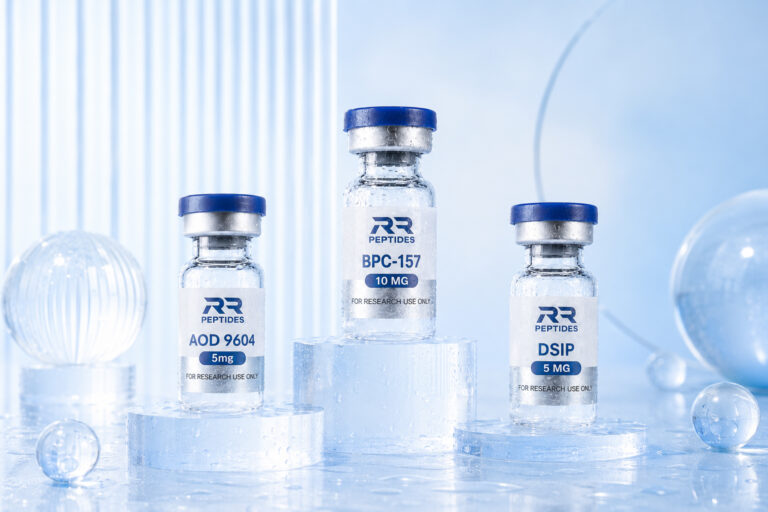
For access to research-focused peptide materials and available analytical documentation, explore RR Peptides. The website currently states that its compounds are third-party tested and provides a dedicated Lab Results/COA section.
What Are High-Purity Research Peptides?
Peptides are chains of amino acids connected by peptide bonds. Their sequence and molecular structure influence characteristics such as molecular mass, solubility, stability, and interactions with other molecules.
In laboratory research, the term high purity generally refers to a sample in which the intended or principal component represents a high proportion of the detectable material under a specified analytical method.
However, researchers should interpret the term carefully.
A peptide described as 98%, 99%, or another percentage pure typically reflects a result obtained under defined analytical conditions. That number does not automatically describe every characteristic of the material.
Explore quality research peptides in Canada at RR Peptides
Purity Is Only One Quality Attribute
When evaluating high purity research peptides Canada, researchers should distinguish several related but different concepts:
Purity — How much of the detectable sample corresponds to the principal component under the analytical method?
Identity — Is that component consistent with the expected peptide?
Quantity — How much material is actually present?
Batch traceability — Can the analytical result be connected to the specific production lot?
Stability — Has the material maintained its characteristics during storage and handling?
These questions contribute to a broader assessment of research material quality.
Therefore, researchers should avoid treating a single purity percentage as a universal quality score.
Why Peptide Samples May Contain Other Components
Peptide synthesis involves multiple chemical steps. During production, researchers or manufacturers build an amino-acid sequence through repeated reactions, followed by cleavage, purification, and analytical characterization.
As a result, a crude peptide preparation can contain the intended sequence alongside synthesis-related materials.
Depending on the production process, additional detectable components may include incomplete sequences, deletion sequences, reaction-related by-products, or degradation products.
Purification aims to separate the desired material from these components. Analytical testing then helps researchers evaluate the resulting sample.
Why Peptide Purity Matters in Laboratory Research
For high purity research peptides Canada, purity matters because experimental observations should ideally reflect the material researchers intend to investigate.
If a sample contains substantial amounts of additional components, those materials may complicate data interpretation.
However, the importance of purity depends on the experimental question, analytical method, peptide, and research model.
Experimental Consistency
Reproducibility is fundamental to laboratory research.
Researchers attempting to repeat an experiment need comparable materials and controlled experimental conditions. Variation in peptide composition between experiments may introduce an additional variable.
For this reason, high purity research peptides Canada should be evaluated alongside batch-specific analytical information whenever reproducibility is important.
A simplified relationship is:
Material Characterization → Controlled Experiment → Reliable Data → Reproducible Interpretation
Material quality does not guarantee a successful experiment, but poorly characterized material can make experimental results more difficult to interpret.
Purity and Experimental Controls
Researchers should not rely on purity as a substitute for proper controls.
Even a highly characterized peptide requires an appropriate experimental design. Depending on the study, researchers may need negative controls, vehicle controls, comparison materials, reference standards, or other controls.
Therefore, peptide purity and experimental design should work together.
A highly pure sample cannot compensate for a poorly designed experiment. Likewise, excellent experimental controls cannot fully compensate for inadequately characterized research material.
Purity vs. Research Suitability
Another important distinction is the difference between analytical purity and suitability for a particular research project.
A sample may show high chromatographic purity but still lack other information required for a specific experiment.
For example, researchers may need information about molecular identity, sequence, formulation, stability, or other characteristics.
Consequently:
High purity ≠ automatic suitability for every experiment
Researchers should define the analytical and material requirements of a study before selecting the peptide.
How Peptide Purity Is Tested
Analytical testing allows researchers to examine different characteristics of peptide materials.
No single technique necessarily answers every quality question. Instead, laboratories may combine complementary methods depending on the peptide and analytical objective.
For high purity research peptides Canada, two methods frequently encountered in analytical documentation are high-performance liquid chromatography (HPLC) and mass spectrometry (MS).
Chromatographic Analysis
When evaluating high purity research peptides Canada, chromatography helps separate sample components according to their interactions with the analytical system.
For peptide analysis, reversed-phase HPLC is widely used because it can separate peptide-related components according to physicochemical differences.
The resulting chromatogram displays detectable components as peaks.
Researchers can then examine factors such as peak distribution, retention behaviour, and relative peak areas under the method used.
Identity Testing
Purity analysis alone does not necessarily establish the identity of the dominant component.
Therefore, laboratories often use an identity-supporting technique alongside chromatography.
Mass spectrometry can provide mass-related information that helps determine whether a detected material is consistent with the expected molecular mass of a peptide.
Mass spectrometry can provide evidence supporting molecular identity.
Together, these approaches provide more useful information than either number considered in isolation.
Why Analytical Methods Should Be Identified
A reported purity percentage becomes more informative when researchers know how the laboratory obtained it.
For example:
Purity: 99%
provides less analytical context than:
Purity: 99% by RP-HPLC under the reported analytical conditions
The second statement identifies the method behind the result.
Therefore, researchers evaluating high purity research peptides Canada should look beyond the percentage and examine the analytical method associated with the claim.
Explore quality research peptides in Canada at RR Peptides
Understanding HPLC and Mass Spectrometry Results
HPLC and mass spectrometry are often mentioned together in peptide quality documentation, but they answer different questions.
Understanding this distinction helps prevent researchers from interpreting analytical reports too broadly.
Retention time — when a component moves through the chromatographic system and reaches the detector.
Peak area — the detector response associated with a component.
Additional peaks — other detectable components separated under the method.
When one peak dominates the chromatogram, researchers may calculate its relative area compared with the total detected peak area.
This can provide an estimate of chromatographic purity.
However, researchers should remember that the result remains method-dependent.
What HPLC Does Not Automatically Prove
Suppose a peptide has a reported HPLC purity of 99%.
It may be tempting to interpret this as meaning that the material is 99% verified in every possible sense.
That interpretation would be too broad.
HPLC purity alone does not necessarily establish:
Correct molecular identity
Exact peptide quantity
Sterility
Endotoxin status
Absence of every possible contaminant
Long-term stability
Suitability for a particular experimental system
Instead, it answers a narrower analytical question about detectable sample composition under the conditions used.
What Mass Spectrometry Adds
Mass spectrometry measures mass-related characteristics of ionized molecules.
For peptide research, the observed mass information can be compared with the expected molecular mass derived from the peptide sequence.
If the observed result is consistent with the expected value, this can support molecular identity.
Therefore, a useful simplified framework is:
HPLC → Composition and Relative Chromatographic Purity
MS → Molecular Mass and Identity Support
Neither should automatically be interpreted as complete characterization on its own.
Why HPLC and MS Are Complementary
Consider a hypothetical sample with a dominant HPLC peak.
Chromatography indicates that one detectable component represents most of the chromatographic signal. However, researchers still need evidence regarding what that component actually is.
Mass spectrometry can add information about whether its molecular mass is consistent with the intended peptide.
Conversely, observing an expected molecular mass does not necessarily establish that the entire sample consists exclusively of that material.
Therefore:
Purity and identity answer different questions.
This is one of the most important principles when evaluating high purity research peptides Canada.
Understanding Certificates of Analysis
A Certificate of Analysis (COA) provides a structured summary of analytical information associated with a material or production batch.
However, the presence of a COA should not automatically be interpreted as complete verification.
Researchers should evaluate the content of the document itself.
What Should Researchers Look for in a Peptide COA?
Depending on the analyses performed, a useful COA may include:
Peptide or compound name
Batch or lot identifier
Analytical method
Reported chromatographic purity
Molecular-mass information
Testing date
HPLC chromatogram
Mass spectrometry data
Laboratory identification
The exact information may vary according to the material and testing program.
Nevertheless, batch traceability is particularly important.
Researchers should be able to determine whether the analytical document corresponds to the actual batch being evaluated.
Why Batch-Specific COAs Matter
Peptide production occurs in batches.
Even when manufacturers follow the same synthesis and purification process, separate production lots should not automatically be assumed to have identical analytical characteristics.
Maintaining this connection helps researchers document the material used in each study.
When comparing high purity research peptides Canada, batch-specific documentation can therefore provide more useful information than a generic COA that cannot be connected to the supplied material.
Third-Party Testing
Third-party testing means that an external analytical laboratory performs testing separately from the supplier.
This separation can provide additional independent analytical information.
However, the phrase third-party tested should still be supported by documentation.
Researchers can ask:
Who performed the test?
What method was used?
Which batch was tested?
When was the analysis performed?
What results were reported?
Does the COA match the supplied batch?
These questions turn a general testing claim into information that researchers can meaningfully evaluate.
RR Peptides currently describes its compounds as third-party tested and states that COAs are available.
Why 99% Purity Does Not Tell the Whole Story
The phrase 99% purity is common in peptide marketing, but researchers should understand precisely what the number represents.
If the value comes from HPLC, it generally describes the relative chromatographic area of the principal detected component under a specific analytical method.
That is useful information—but it is not complete characterization.
Purity Does Not Equal Identity
Imagine that a chromatogram shows one dominant peak representing approximately 99% of the integrated detected peak area.
Researchers still need to ask:
What molecule produced that peak?
This is why identity-supporting information matters.
Mass spectrometry, sequence-related characterization, or other appropriate analytical techniques can provide complementary evidence depending on the material.
Purity Does Not Equal Quantity
Purity and quantity also represent different concepts.
A sample may have high chromatographic purity without the chromatographic percentage independently confirming the absolute amount of peptide in the container.
Therefore:
Purity → relative sample composition under the method
Quantity → amount of material
Researchers should avoid treating one measurement as proof of the other.
Purity Does Not Establish Sterility
Chromatographic purity does not automatically demonstrate microbiological sterility.
These are entirely different quality questions requiring different analytical approaches.
Similarly, an HPLC result does not independently establish endotoxin levels.
This distinction becomes particularly important when online discussions use the term high purity as though it represented every aspect of product quality.
For laboratory research, analytical claims should remain limited to what the underlying test actually measured.
Product Transparency and Verification
When evaluating high purity research peptides Canada, researchers should look at the quality of the supporting information rather than focusing exclusively on the headline purity number.
Transparency helps researchers determine what evidence supports the supplier’s claims.
Product Information Should Match Analytical Data
Basic product information should remain consistent across the product page, label, COA, and other available documentation.
Researchers may compare:
Compound name → Batch number → Reported quantity → Analytical report
Inconsistencies between these sources can make traceability more difficult.
For long-term laboratory projects, maintaining this documentation may also help researchers compare materials used across different experimental periods.
Analytical Claims Should Be Specific
Statements such as high purity, laboratory tested, or third-party verified are more useful when researchers can review supporting analytical information.
For example, a claim of high purity becomes more informative when the documentation identifies:
the analytical technique,
the measured result,
the batch,
and the testing laboratory.
This allows researchers to evaluate evidence rather than relying solely on marketing terminology.
Verification Is a Process
Quality verification should not be reduced to one checkbox.
A more complete process looks like:
Product Identification → Batch Verification → HPLC Review → Identity Data → COA Review → Storage Evaluation
Each stage addresses a different part of research material quality.
For this reason, evaluating high purity research peptides Canada is better viewed as a verification process than a search for the highest advertised purity number.
Factors That Can Affect Peptide Quality and Stability
Analytical testing describes a sample at a particular point in time.
After testing, environmental conditions may influence the material.
Therefore, researchers should also consider storage, packaging, transportation, and laboratory handling when evaluating peptide quality.
Temperature
Chemical degradation rates can change with temperature.
However, optimal storage conditions depend on the specific peptide, formulation, and available stability data.
Researchers should therefore follow compound-specific documentation or validated laboratory procedures rather than assuming one storage temperature applies to every peptide.
Moisture
Water exposure may affect some research materials, particularly during prolonged storage.
Lyophilization is commonly used to remove much of the water from peptide preparations and can improve stability for certain materials under appropriate conditions.
Nevertheless, lyophilized does not mean indefinitely stable.
Environmental exposure and storage conditions still matter.
Oxidation
Some amino-acid residues are more susceptible to oxidation than others.
Exposure to oxygen and other environmental conditions may therefore contribute to chemical changes in susceptible peptides.
This illustrates why peptide sequence can influence stability.
Light Exposure
Certain compounds may undergo light-related degradation.
Appropriate packaging and storage practices can help limit unnecessary exposure when light sensitivity is relevant to the material.
Peptides in Solution
Once a lyophilized peptide enters a solution, its stability profile can differ from the dry material.
Factors that may become relevant include:
solvent composition
pH
concentration
temperature
storage duration
oxidation
adsorption to surfaces
repeated environmental exposure
As a result, researchers should not assume that a storage condition established for lyophilized material automatically applies after preparation in solution.
Packaging and Shipping
Quality considerations continue between the supplier and the laboratory.
Packaging should help protect materials from relevant environmental conditions during transportation. Meanwhile, researchers should consider shipping duration and environmental exposure for stability-sensitive materials.
For high purity research peptides Canada, quality assessment should consider this complete chain rather than focusing exclusively on the original analytical result.
High Purity Research Peptides Canada and the Regulatory Context
Canadian researchers should distinguish laboratory analytical quality from regulatory authorization.
A peptide can be the subject of scientific research without every commercial product containing that peptide being authorized as a drug for human use.
Likewise, a high purity result does not establish therapeutic authorization.
Laboratory Research and Therapeutic Authorization Are Different
Laboratory studies can investigate molecular properties, biochemical interactions, cellular responses, or other experimental questions.
Human therapeutic use operates under a different regulatory framework.
Health Canada states that unauthorized injectable peptide drugs have not undergone its assessment for safety, efficacy, and quality for their represented use. The agency has warned against online unauthorized injectable peptide products and specifically advises consumers not to use products labelled for research use as human drugs.
In July 2026, Health Canada also announced a permanent injunction against a Canadian seller of unauthorized injectable peptides after repeated enforcement action.
Analytical Purity Does Not Establish Regulatory Status
This distinction is particularly important when discussing high purity research peptides Canada.
Consider these two statements:
The sample showed high chromatographic purity.
The product is authorized for therapeutic use in Canada.
These statements answer completely different questions.
The first concerns an analytical measurement.
The second concerns regulatory authorization.
One cannot be inferred from the other.
Three Separate Questions for Canadian Researchers
A useful framework is to ask:
1. What does the scientific evidence show? This concerns experimental findings.
2. What does the analytical evidence show? This concerns purity, identity, composition, and related material characteristics.
3. What is the regulatory status of the specific product and represented use? This concerns Canadian regulatory requirements.
Keeping these questions separate helps researchers interpret peptide-related information more accurately.
Building a Better Peptide Quality Evaluation Process
Rather than selecting a research material based on one percentage, researchers can use a broader evaluation framework.
Start with the exact peptide required for the experiment.
Next, verify the product and batch information. Then examine the analytical documentation and determine which methods generated the reported results.
After reviewing purity and identity data, researchers can consider storage conditions, packaging, transportation, and laboratory handling requirements.
A simplified framework is:
Research Requirement → Product Identification → Batch Traceability → Purity Analysis → Identity Support → Stability Review → Experimental Use
This process provides a more complete assessment of high purity research peptides Canada than relying solely on an advertised HPLC percentage.
Common Quality Red Flags
Researchers may want to examine materials more carefully when they encounter issues such as:
Purity percentages without an identified analytical method
COAs without clear batch or lot information
Analytical documents that cannot be connected to the supplied product
Missing identity-related information
Conflicting information between product pages and COAs
Generic testing claims without supporting results
Unclear testing dates
Unsupported therapeutic claims associated with research-only materials
No single issue necessarily determines the quality of a research material.
However, transparent and traceable documentation gives researchers more information for making an evidence-based assessment.
SEE MORE
For additional information about research peptide quality, testing, and laboratory selection, explore:
What Are Research Peptides? Definition, Properties, and Scientific Applications
Research Peptides Canada: Quality, Testing, and Laboratory Research Guide
Research Peptides for Laboratory Studies: Selection, Quality, and Research Planning
Research Peptide Supplier Canada: How to Evaluate Quality and Reliability
These related resources can help researchers understand how peptide quality fits into the broader research workflow.
High purity research peptides Canada generally refers to peptide research materials with a high reported proportion of the principal detectable component under a specified analytical method. Researchers should evaluate the percentage alongside identity, batch information, analytical methods, and other relevant quality characteristics.
What does peptide purity mean?
Peptide purity generally describes the proportion of the principal detected component relative to other detectable components under the analytical method used. The exact interpretation depends on the method and testing conditions.
How is peptide purity tested?
HPLC is commonly used to examine chromatographic sample composition and estimate relative purity. Other analytical techniques may provide complementary information depending on the peptide and research objective.
What is the difference between HPLC and mass spectrometry?
HPLC primarily provides information about sample separation and relative chromatographic composition. Mass spectrometry provides mass-related information that can support molecular identity.
Does 99% HPLC purity mean a peptide is 99% verified?
No. A 99% HPLC result describes chromatographic purity under the reported analytical conditions. It does not independently establish molecular identity, quantity, sterility, endotoxin status, stability, or every other quality characteristic.
Why is mass spectrometry important for peptide verification?
Mass spectrometry can provide evidence that the detected molecular mass is consistent with the expected peptide. This complements HPLC because identity and chromatographic purity answer different analytical questions.
What should a peptide COA include?
Depending on the testing performed, a COA may include the peptide name, batch or lot number, analytical method, reported purity, mass-related identity information, testing date, chromatogram, and laboratory information.
Why does batch-specific testing matter?
Different production batches should not automatically be assumed to have identical analytical characteristics. Batch-specific documentation helps connect test results to the material actually used in a laboratory experiment.
Can storage affect peptide purity?
Storage conditions can contribute to chemical degradation or other changes in some peptide materials. Temperature, moisture, oxygen, light, formulation, and time may all influence stability depending on the peptide.
Are high-purity research peptides authorized for human use in Canada?
High analytical purity does not establish authorization for human use. Health Canada states that unauthorized injectable peptide drugs are not assessed for safety, efficacy, and quality for their represented use and has taken enforcement action against their illegal sale.
Where can researchers review peptide COAs?
RR Peptides currently provides a dedicated Lab Results/COA section and states that its research compounds are third-party tested. Researchers should review the available documentation for the specific material and batch being considered.
Final Thoughts
Evaluating high purity research peptides Canada requires more than looking for the highest advertised percentage. Researchers should consider how purity was measured, whether molecular identity is supported, whether analytical documentation matches the relevant batch, and how storage and handling may affect the material after testing.
Ultimately, purity, identity, batch traceability, analytical transparency, and stability should be considered together. For Canadian researchers looking to review research-focused peptide materials and available COA information, visit RR Peptides and examine the supporting documentation relevant to each compound.
Disclaimer: All products and compounds referenced are intended strictly for laboratory and research purposes only. This content is provided for informational and educational purposes and is not intended as medical advice or to diagnose, treat, cure, or prevent any disease.
3 Comments
Really useful overview of high-purity research peptides in Canada. I especially liked the focus on purity and quality, since consistency can be an important consideration when working with research materials. It would be interesting to see more detail on the analytical methods commonly used to verify peptide purity.
I found this article helpful because peptide purity can be an easy detail to overlook when comparing research materials. The Canada-focused perspective also makes the information more relevant for local researchers and laboratories. A follow-up explaining how researchers evaluate certificates of analysis would be really useful.




Really useful overview of high-purity research peptides in Canada. I especially liked the focus on purity and quality, since consistency can be an important consideration when working with research materials. It would be interesting to see more detail on the analytical methods commonly used to verify peptide purity.
I found this article helpful because peptide purity can be an easy detail to overlook when comparing research materials. The Canada-focused perspective also makes the information more relevant for local researchers and laboratories. A follow-up explaining how researchers evaluate certificates of analysis would be really useful.
emily.brooks.sample@gmail.com