BPC-157 has become a recurring subject in peptide science because researchers have examined it across several preclinical models involving cellular signaling, tissue-related processes, gastrointestinal systems, vascular responses, and cell migration. Although online discussions often present simplified descriptions, laboratory research requires a more precise view of molecular identity, experimental design, analytical quality, and the limits of available evidence. For anyone asking what is BPC-157 peptide, the most useful starting point is to separate established chemical characteristics from observations reported in experimental models.
This article from RR Peptides explores what is BPC-157 peptide from a research perspective, including its molecular structure, biological characteristics, laboratory applications, and quality considerations. BPC-157 has become a recurring subject in peptide research because experimental studies have examined it across several preclinical models involving cellular signaling, tissue-related processes, gastrointestinal systems, vascular responses, and cell migration.
Understanding what is BPC-157 peptide requires more than a simple definition. Researchers should distinguish established chemical characteristics from observations reported in experimental models. This distinction is important because most available evidence remains preclinical, meaning that findings from cells or experimental models should not automatically be interpreted as demonstrated effects in humans.
A study may investigate an isolated compound, a formulated preparation, or a combination containing several research compounds. These represent different experimental conditions and should not be treated as interchangeable. RR Peptides presents this information in a research-focused context to help readers understand the compound, its characteristics, and the factors that should be considered when evaluating research materials.
What Is BPC-157 Peptide?
For a concise scientific definition, what is BPC-157 peptide can be answered by describing it as a synthetic peptide consisting of 15 amino acids that has primarily appeared in preclinical research literature. Experimental studies have explored its behavior in several biological systems, but the existence of experimental findings does not establish a therapeutic effect or a validated human application.
A peptide is a chain of amino acids connected through peptide bonds, and its sequence determines many of its structural and chemical characteristics. BPC-157 is therefore better understood as a defined molecular research subject than as a general category of “healing peptide.”
The research literature associated with what is BPC-157 peptide includes investigations into cellular signaling and tissue-related models. Other studies have examined gastrointestinal systems, vascular responses, and processes related to cell movement. These areas provide a framework for laboratory investigation rather than a basis for assuming a single mechanism or outcome.
Terminology also matters. BPC-157 is sometimes discussed in multi-component peptide blends, but findings from an isolated compound should be distinguished from observations involving a formulation with additional research compounds or components.
Research characteristic
Description
Molecular category
Synthetic peptide
Approximate sequence length
15 amino acids
Evidence base
Primarily preclinical
Common research areas
Cellular, gastrointestinal, vascular, tissue-related, and migration models
Interpretation
Experimental findings should not be treated as established human clinical outcomes
It is a defined synthetic peptide investigated in experimental systems, while the strength and relevance of individual findings depend on the model, concentration, controls, analytical verification, and study design.
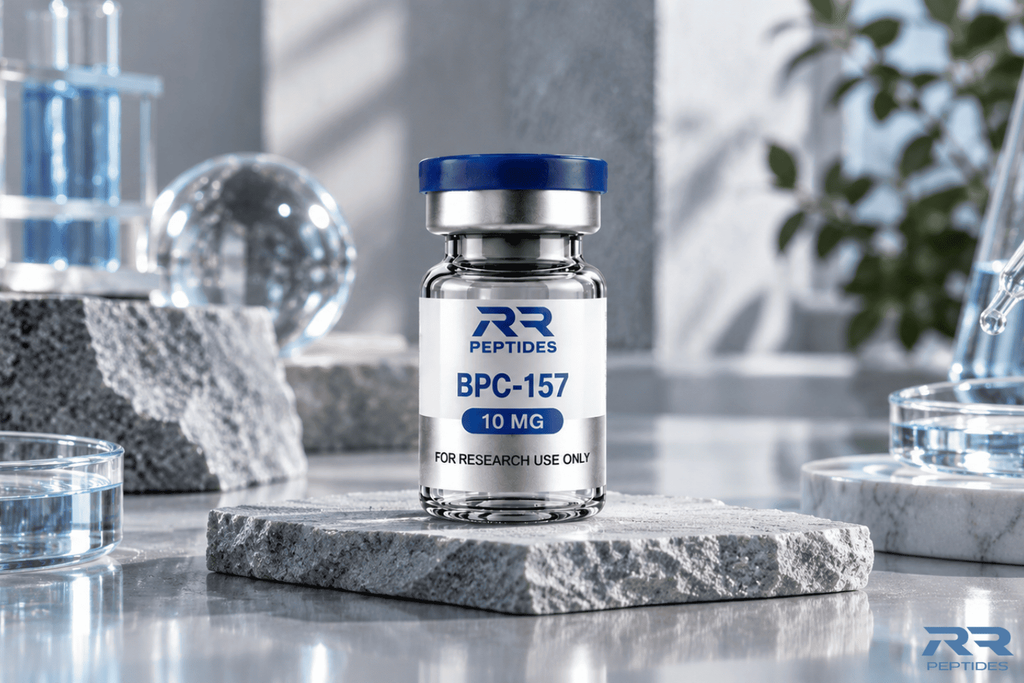
Explore laboratory research applications with BPC-157 10mg.
Origin and Structure of BPC-157
The question of what is BPC-157 peptide becomes more specific when its origin and structure are considered. BPC-157 is generally described in research literature as a synthetic 15-amino-acid peptide. Its sequence-based identity differentiates it from larger proteins and from other peptide compounds with different amino-acid arrangements.
Peptide structure matters because changing even one residue can alter molecular properties, stability, interactions, and experimental behavior. For that reason, researchers should not treat all peptides as biologically interchangeable simply because they belong to the same broad chemical class.
When discussing what is BPC-157 peptide, it is also useful to separate sequence identity from source. A synthetic research material is produced through a manufacturing process intended to generate the specified molecular sequence. The final analytical profile, however, still needs to be evaluated through appropriate testing and batch documentation.
Structural factor
Why it matters in research
Amino-acid sequence
Defines molecular identity
Peptide length
Helps distinguish the compound from related peptides
Molecular characteristics
Affect analytical behavior and experimental calculations
Sample purity
Influences interpretation of observed results
Batch identity
Connects analytical data with the material studied
The structural answer to what is BPC-157 peptide should therefore not stop at the number of amino acids. Researchers also need to know whether the tested material matches the intended molecular identity and whether the analytical documentation applies to the actual batch used.
Another consideration is concentration. A stated mass does not by itself describe molar concentration because molecular weight must be considered. This becomes especially important when comparing BPC-157 with other peptides or when designing controlled experiments involving multiple compounds.
For laboratory work, structure and composition should be documented separately. Structure describes the molecular entity being studied, while composition can describe what else is present in the sample. This distinction becomes critical for blends, where several compounds may contribute to the measured material.
Biological Characteristics of BPC-157
Research has not focused on one universal pathway. Instead, different models have examined signaling, cellular responses, tissue-associated observations, gastrointestinal systems, vascular processes, and cell migration.
Cellular Signaling and Tissue-Related Research
Experimental work involving what is BPC-157 peptide has explored cellular signaling and tissue-related responses. These studies can investigate how cells behave under defined laboratory conditions and whether exposure to a compound is associated with measurable changes.
Such findings need to be interpreted within the limits of the experimental model. A cellular response observed under controlled conditions does not automatically indicate the same response in a whole organism, and an animal-model observation does not automatically establish a human effect.
Gastrointestinal and Vascular Models
Research into what is BPC-157 peptide has also included gastrointestinal and vascular models. These areas are scientifically relevant because they allow researchers to examine responses involving different biological systems and experimental endpoints.
The value of these models lies in generating testable observations. Researchers can compare treated and control groups, evaluate predefined measurements, and determine whether an observed difference is reproducible. The resulting evidence remains dependent on the quality of the experimental design.
Cell Migration and Related Research
Cell migration is another area discussed in the literature surrounding what is BPC-157 peptide. Laboratory models may evaluate how cells move under specific conditions, providing information about cellular behavior and signaling.
However, cell migration assays are model-specific. A change in migration in vitro should not be described as proof of a clinical outcome. Researchers must identify the cell type, assay conditions, concentration, exposure period, and measurement method before drawing conclusions.
Evidence Boundaries
The biological discussion of what is BPC-157 peptide should always include evidence boundaries. Preclinical findings can help generate hypotheses and guide further investigation, but they do not replace controlled human clinical evidence.
Research area
Typical laboratory question
Cellular signaling
Does exposure alter measurable signaling responses?
Tissue-related models
Are experimental tissue-associated endpoints changed?
Gastrointestinal systems
What responses occur in defined gastrointestinal models?
Vascular models
Are measurable vascular-related parameters affected?
Cell migration
Does exposure correlate with changes in cell movement?
This framework keeps what is BPC-157 peptide connected to observable research questions rather than broad claims. It also helps readers understand why different studies may produce different results even when they investigate the same compound.
How BPC-157 Is Studied in Laboratory Research
When researchers ask what is BPC-157 peptide in an experimental context, the question often concerns how the material is evaluated rather than only what it is chemically. Laboratory research begins with a defined objective, followed by selection of an appropriate model, controls, analytical measurements, and reproducible procedures.
A study involving what is BPC-157 peptide may use cell-based experiments, animal models, biochemical assays, or other preclinical systems. Each model answers different questions. Cell studies can isolate specific mechanisms, while more complex models can examine interactions among multiple biological systems.
Experimental Research Framework
A strong study defines the research question before selecting the experimental conditions. Researchers should identify the endpoint being measured, the control group, the experimental variables, and the analytical method used to evaluate results.
If the sample contains additional peptides or excipients, those factors may influence the observed result.
Isolated Peptide Versus Peptide Blends
One important consideration is whether the experiment uses isolated BPC-157 or a blend. Findings from isolated what is BPC-157 peptide experiments cannot automatically be applied to a formulation containing several compounds.
A multi-component blend creates a different experimental system. If a response is observed, researchers may need additional controls to determine whether it is associated with one component, several components, or the formulation as a whole.
Experimental approach
Main advantage
Key limitation
Isolated compound
Easier component attribution
May not represent a multi-component formulation
Multi-component blend
Reflects the tested formulation
Attribution can be more difficult
Cell model
Allows controlled mechanistic study
Limited biological complexity
Animal model
Provides broader biological context
Not automatically predictive of humans
Importance of Experimental Controls
Controls are essential when studying what is BPC-157 peptide. A negative control can help establish baseline behavior, while additional comparison groups can help identify whether an observed effect depends on concentration, formulation, or another variable.
Reproducibility is equally important. Researchers should record sample identity, batch information, experimental conditions, analytical methods, and relevant storage information. Consistent documentation makes it easier to compare findings across experiments.
The interpretation of what is BPC-157 peptide should therefore include both molecular identity and experimental context. A compound cannot be evaluated adequately by name alone if the sample, controls, or analytical evidence are unclear.
Explore laboratory research applications with BPC-157 10mg.
Quality, Purity, and Research Considerations
For laboratory researchers, understanding what is BPC-157 peptide also means understanding what is actually present in the tested material. Identity, purity, quantity, and batch information answer different questions and should not be treated as interchangeable measurements.
Identity and Purity
Identity asks whether the expected molecular species is present. Purity describes the proportion of the specified analyte under a defined analytical method. Quantity describes how much material is measured.
A high purity percentage does not independently prove that a sample contains the exact nominal quantity. Similarly, a stated quantity does not prove molecular identity. Researchers should therefore evaluate these characteristics separately.
Term
What it describes
Identity
Whether the expected molecular species is present
Purity
Analytical cleanliness under a defined method
Quantity
Measured amount of material
Batch identity
Which specific lot was tested
Batch-Specific Documentation
A Certificate of Analysis, or COA, is most useful when it corresponds to the exact batch being evaluated. Researchers should compare the lot or batch number on the material with the identifier shown on the analytical report.
Useful documentation may include product identification, lot number, testing date, laboratory information, HPLC or UPLC results, mass spectrometry or other identity data, and quantitative measurements where applicable.
When reviewing what is BPC-157 peptide, a generic certificate should not automatically be treated as proof for every batch. Analytical records are most informative when they clearly describe the material actually used in the experiment.
Composition and Purity Are Different
Composition refers to what is present and, where documented, the stated amount of each component. Purity refers to an analytical measurement of a specified material or analyte. These concepts are related but not identical.
This distinction is particularly important when BPC-157 appears in a multi-component formulation. A researcher should determine whether the analytical report identifies BPC-157 specifically, measures the total sample, or evaluates another property.
Canadian Research Context
For researchers in Canada, the distinction between research materials and products authorized for therapeutic use is important. A research-market peptide should not be described as a Health Canada-approved therapeutic product unless specific authorization supports that statement.
The safest approach is to review the exact product documentation, applicable institutional requirements, and relevant Canadian regulatory information for the intended research setting. Product labels alone should not be treated as evidence of therapeutic authorization.
Describing a compound as a research material is different from presenting it as an approved medicine, and educational content should maintain that distinction.
Researchers should also record the source, batch, analytical documentation, and experimental conditions. These records support traceability and make later comparisons more meaningful. Clear documentation also improves study transparency, supports meaningful comparison across experiments, and helps researchers identify whether conclusions arise from the compound itself, the formulation, or the specific analytical conditions. These records are valuable when independent laboratories attempt to reproduce earlier observations or compare results.
In simple terms, what is BPC-157 peptide refers to a synthetic 15-amino-acid peptide that has been investigated mainly in preclinical research. Studies have explored several biological systems, but research findings should not be interpreted as established human medical outcomes.
Is BPC-157 a protein?
BPC-157 is generally described as a peptide rather than a full protein. Its relatively short amino-acid sequence distinguishes it from much larger protein molecules.
What research areas are associated with BPC-157?
The literature on what is BPC-157 peptide includes cellular signaling, tissue-related models, gastrointestinal research, vascular responses, and cell migration. The specific findings depend on the experimental model and study design.
Is BPC-157 clinically proven?
The available evidence should be described primarily as preclinical rather than as proof of established clinical efficacy. Laboratory and animal findings do not automatically establish safety, effectiveness, or appropriate use in humans.
Why does peptide structure matter?
Structure matters because amino-acid sequence influences molecular identity and characteristics. Researchers need to know that the material being studied corresponds to the intended compound before interpreting experimental results.
Does purity confirm the exact amount of BPC-157?
No. Purity and quantity are separate analytical concepts. A reported purity value does not independently establish the exact total amount or confirm every aspect of a sample’s composition.
Why is batch information important?
Batch information connects the physical material with its analytical documentation. When what is BPC-157 peptide is being studied experimentally, matching the sample identifier with the COA improves traceability and supports reproducibility.
Can findings from a peptide blend be attributed directly to BPC-157?
Not automatically. If a formulation contains multiple compounds, the observed result belongs to a more complex experimental system. Separate controls are needed to determine the contribution of individual components.
What should researchers check before using a BPC-157 research material?
Researchers should review the stated identity, composition, purity information, quantity, lot number, analytical methods, and batch-specific documentation. The experimental objective and applicable institutional requirements should also be considered.
Final Research Perspective
The most accurate answer to what is BPC-157 peptide combines chemical identity, biological research context, and evidence limitations. BPC-157 is a synthetic 15-amino-acid peptide that has been investigated in preclinical models involving cellular, gastrointestinal, vascular, tissue-related, and migration-associated research areas.
A useful interpretation of what is BPC-157 peptide should avoid turning experimental observations into clinical claims. The relevance of a finding depends on the model, experimental conditions, controls, concentration, analytical methods, and reproducibility. These factors determine how confidently a result can be interpreted.
For laboratory researchers, the most practical approach is to evaluate the material itself rather than relying only on a product name. Identity, purity, quantity, batch traceability, and analytical documentation provide a stronger foundation for reproducible research.
Ultimately, what is BPC-157 peptide is not only a question of definition. It is also a question of how the compound is characterized, tested, compared, and interpreted within a controlled research framework. Keeping these distinctions clear helps ensure that educational content remains scientifically responsible and that preclinical observations are not presented as established human outcomes.
RR Peptides focuses on providing research-oriented information that helps readers better understand peptide materials, their documented characteristics, and the importance of appropriate analytical evaluation. When reviewing BPC-157 or other research compounds, researchers should always consider the available documentation and the specific requirements of their research environment.
Disclaimer:All products and compounds discussed are intended strictly for laboratory and research purposes. This article is provided for educational and informational purposes only and is not medical advice, therapeutic guidance, or instructions for human administration.
3 Comments
This is a helpful introduction to BPC-157, especially for readers who are new to peptide research. I found the explanation of its proposed biological activity useful for understanding why the compound has attracted interest in scientific studies.
I liked the straightforward explanation of what BPC-157 is and how it is discussed in research. Separating proposed mechanisms from established evidence is especially useful when looking into a compound that is still being investigated.
The overview gives a useful starting point for understanding BPC-157 from a research perspective. I appreciate the focus on its biological characteristics and the current state of the evidence rather than making conclusions beyond what the research supports.





This is a helpful introduction to BPC-157, especially for readers who are new to peptide research. I found the explanation of its proposed biological activity useful for understanding why the compound has attracted interest in scientific studies.
I liked the straightforward explanation of what BPC-157 is and how it is discussed in research. Separating proposed mechanisms from established evidence is especially useful when looking into a compound that is still being investigated.
The overview gives a useful starting point for understanding BPC-157 from a research perspective. I appreciate the focus on its biological characteristics and the current state of the evidence rather than making conclusions beyond what the research supports.