TB-500 is a peptide-related research material commonly discussed in connection with cellular migration, cytoskeletal organization, signaling, and tissue-associated biological processes. TB-500 research has attracted attention because experimental studies involving related peptide systems have examined how cells respond to specific molecular environments. At RR Peptides, research-focused information is presented with an emphasis on laboratory interpretation rather than therapeutic claims.
The scientific discussion surrounding TB-500 requires careful attention to molecular identity. TB-500 is frequently discussed alongside thymosin beta-4, but these terms should not automatically be considered interchangeable. Researchers evaluating TB-500 research should verify the exact material, sequence, analytical characterization, experimental model, and endpoints reported in each study.
This article provides an overview of TB-500 research, including biological properties, cellular pathways, preclinical models, evidence limitations, and considerations for researchers in Canada. The objective is to explain what researchers investigate, how findings are interpreted, and why experimental context matters. For additional laboratory-focused peptide information, RR Peptides provides research-oriented resources for scientific study.
What Is TB-500 Research?
TB-500 research refers to laboratory and preclinical investigation involving materials identified as TB-500 and related peptide systems. Researchers may examine cellular migration, cytoskeletal behavior, molecular signaling, vascular-associated responses, and tissue models. A key consideration is the relationship between TB-500 and thymosin beta-4. Although TB-500 is commonly described as a synthetic peptide related to thymosin beta-4, the terms should not automatically be treated as interchangeable.
Researchers should verify the exact material used in each study rather than relying only on its name. Sequence information, molecular mass, purity, analytical testing, and batch documentation can help establish the identity and characteristics of the material evaluated.
When reviewing TB-500 research, several factors are particularly important:
Molecular identity and peptide composition
Batch or lot information
Purity and analytical characterization
Experimental model and study conditions
Controls and measured endpoints
These factors influence how confidently an observation can be interpreted.
In laboratory settings, TB-500 research depends on clearly defined questions and measurable endpoints. Careful TB-500 research separates observation from interpretation. Well-documented TB-500 research improves comparison across studies. Transparent TB-500 research also supports reproducibility and responsible scientific discussion consistently.
TB-500 research can involve several levels of complexity. Cell-based systems allow researchers to isolate specific cellular responses. Tissue models introduce structural context, while animal models provide a more complex biological environment. Each model answers different questions and has different limitations.
Research component
Main purpose
Important consideration
Molecular identity
Establish tested material
Sequence matters
Purity testing
Assess material quality
Method should be documented
Cell model
Examine cellular responses
Complexity is limited
Tissue model
Examine structural responses
Systemic factors may be absent
Animal model
Study integrated responses
Human translation remains uncertain
Experimental findings can support hypotheses, but preclinical observations do not automatically demonstrate clinical efficacy or safety. At RR Peptides, research information emphasizes laboratory context, analytical considerations, and responsible interpretation.
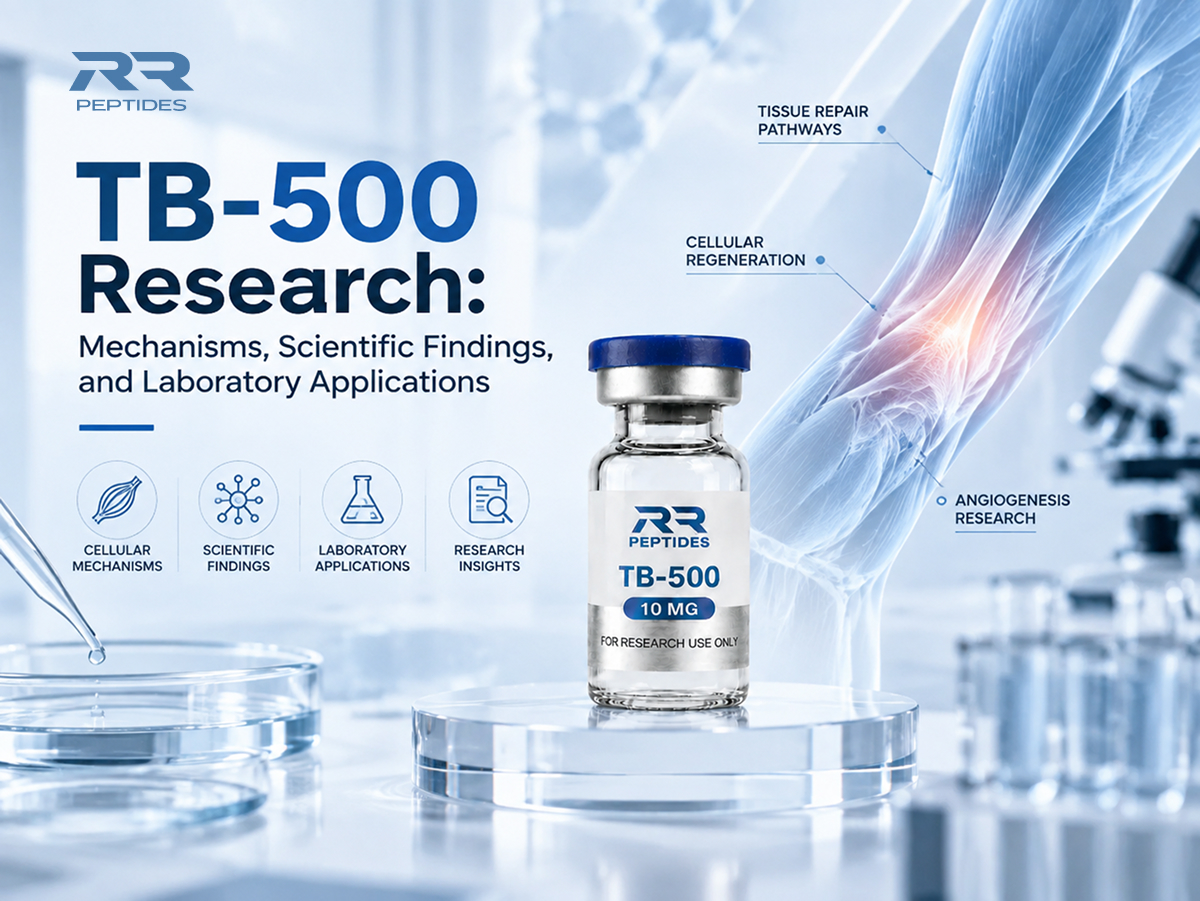
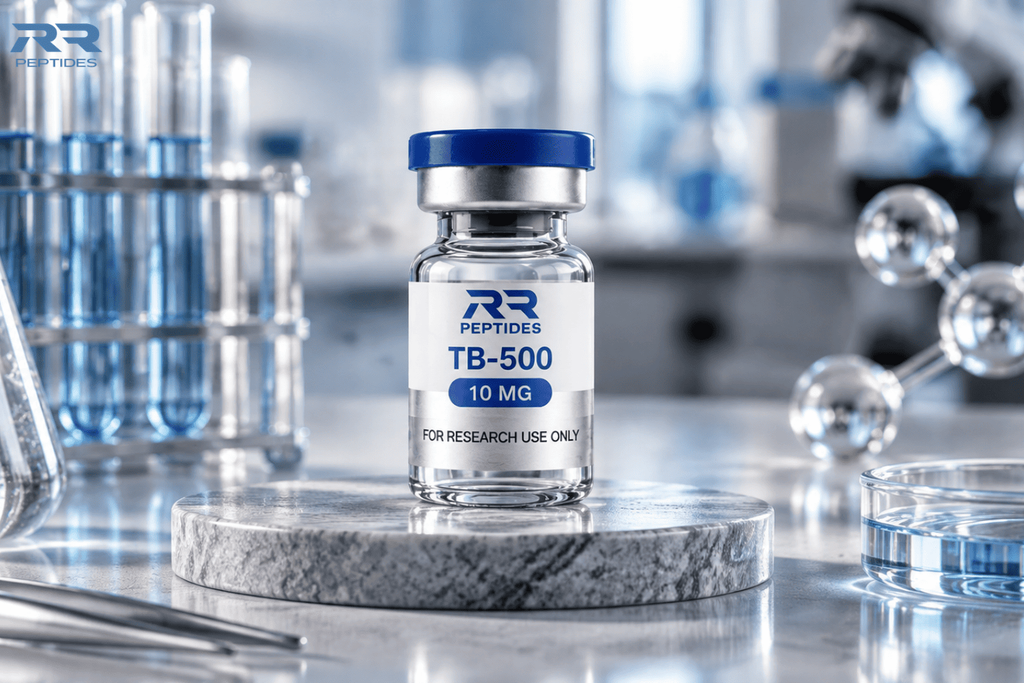
Learn more about the specifications and research overview of this peptide from RR Peptides featuring TB-500 10mg.
Biological Properties Associated with TB-500
The biological properties discussed in TB-500 research are generally connected with cellular structure, movement, cytoskeletal organization, and molecular signaling. These processes involve interactions among proteins, signaling pathways, and cellular components.
The biological context is important because findings associated with thymosin beta-4 are sometimes incorporated into broader discussions about TB-500. Researchers should establish the identity of the material used in the original experiment before treating such evidence as directly applicable.
Peptide identity and molecular context
Understanding molecular identity is one of the first steps in interpreting TB-500 research. A peptide name alone may not provide enough information to determine precise molecular composition.
Researchers can examine sequence information, molecular mass, analytical data, and batch-specific documentation when available. Mass spectrometry can contribute to identity confirmation, while HPLC or UPLC can provide information about purity and related components.
Identity and purity answer different questions. Identity asks whether the expected molecular material is present, while purity concerns the proportion of material meeting a defined analytical criterion.
Cellular and structural properties
Actin is an important component of the cellular cytoskeleton and contributes to cell shape, organization, and movement. Research involving thymosin beta-4 has examined relationships between peptide-associated processes and actin dynamics.
This provides a biological framework for TB-500 research because cellular movement depends on coordinated cytoskeletal remodeling. However, evidence concerning thymosin beta-4 should not automatically be presented as evidence for every material described commercially as TB-500.
Reand cytoskeletal proceints
Researchers can investigate biological responses through multiple endpoints. A migration assay can measure movement, while protein analysis can examine molecular markers. Microscopy can provide information about cell morphology and organization.
The endpoint determines what a study can conclude. Increased cell movement does not by itself establish tissue regeneration. Similarly, observing a molecular marker does not necessarily prove that a specific pathway is directly responsible for a response.
Biological property
Example endpoint
Interpretation
Cell migration
Migration assay
Measures movement
Cytoskeletal organization
Microscopy
Examines organization
Protein expression
Protein analysis
Measures selected markers
Gene expression
RNA analysis
Examines transcriptional changes
Cell morphology
Imaging
Describes structural changes
The biological properties considered in TB-500 research should therefore remain connected to the actual endpoint measured. This prevents a narrow laboratory observation from becoming a broad physiological conclusion.
Cellular Pathways Studied in TB-500 Research
Cellular pathway research attempts to understand relationships between an experimental material and measurable molecular or cellular responses. TB-500 research may investigate processes associated with cytoskeletal organization, migration, adhesion, vascular-associated behavior, and intracellular signaling.
Researchers may use several complementary approaches because a single assay rarely establishes a complete mechanism. A migration assay may demonstrate a change in movement, while molecular analysis can investigate signaling events occurring alongside that change.
Researchers may investigate several cellular responses, including:
Actin and cytoskeletal organization
Cell migration-related signaling
Cellular adhesion
Molecular markers
Endothelial cell behavior
Actin and cytoskeletal processes
The actin cytoskeleton contributes to cell shape, movement, adhesion, and structural organization. Changes in actin dynamics can influence how cells interact with their surrounding environment.
Research involving thymosin beta-4 has investigated relationships between peptide-associated activity and actin-related cellular processes. This provides a mechanistic basis for studying cellular movement and structural organization in related experimental systems.
Researchers should avoid assuming that a mechanism demonstrated for one molecular entity applies identically to another. Molecular characterization remains essential.
Vascular-associated pathways
Endothelial cells are commonly used in experimental systems examining cellular migration, proliferation-associated responses, and network formation. These models can provide information about vascular-associated cellular behavior.
Results from endothelial cell assays should remain within the scope of the model. An in-vitro observation is not equivalent to demonstrating a complete vascular response in an intact organism.
For TB-500 research, mechanistic interpretation becomes more informative when multiple independent measurements support the same hypothesis. Reproducibility across laboratories and models is also important.
Findings from Preclinical Research Models
Preclinical models allow scientists to investigate biological questions under controlled experimental conditions before conclusions are considered in a clinical context. TB-500 research can involve cell cultures, tissue systems, molecular assays, and animal models.
Each model provides a different level of biological complexity. A controlled cell experiment may provide detailed information about a particular mechanism, whereas an animal model can incorporate interactions among multiple tissues and physiological systems.
Cell-based models
Cell-based models are useful because researchers can control variables such as cell type, culture environment, exposure conditions, observation period, and measurement method.
These systems may be used to examine migration, morphology, adhesion, signaling markers, and cytoskeletal behavior. Their main limitation is that isolated cells cannot reproduce the full complexity of an intact biological system.
Findings from cell culture should therefore be treated as mechanistic or exploratory evidence rather than direct evidence of a human physiological outcome.
Tissue models
Tissue models provide additional structural information. Researchers may examine cellular distribution, tissue organization, extracellular matrix characteristics, or molecular markers.
These models can address some limitations of isolated cells. Nevertheless, they may not reproduce systemic circulation, immune interactions, metabolism, or other physiological variables.
Animal models
Animal studies introduce greater biological complexity and allow researchers to observe responses within an integrated organism. Depending on the model, investigators may evaluate tissue-associated changes, molecular markers, structural observations, or predefined endpoints.
Animal research remains preclinical. Differences between species can influence metabolism, signaling, tissue structure, and experimental responses. Animal findings cannot automatically be translated into equivalent human outcomes.
When interpreting findings, researchers should document:
Exact research material and molecular identity
Experimental model and species or cell type
Exposure conditions and study duration
Control groups and comparison methods
Primary endpoints and analytical techniques
Replication and study limitations
Model
Primary value
Main limitation
Cell culture
High experimental control
Simplified environment
Tissue model
Structural context
Limited systemic interactions
Animal model
Biological complexity
Human translation uncertain
Molecular assay
Detailed molecular information
May not show function
For Canadian researchers, research-use materials should be distinguished from products authorized for therapeutic use. Commercial availability or publication in scientific literature does not independently establish authorization for human therapeutic use by Health Canada.
Learn more about the specifications and research overview of this peptide from RR Peptides featuring TB-500 10mg.
Current Evidence and Research Limitations
Current TB-500 research should be interpreted carefully because the evidence base can include different experimental materials, models, terminology, and research objectives. Some discussions combine findings involving thymosin beta-4 with statements about TB-500 without establishing whether the materials are molecularly identical.
Evidence quality depends on experimental design. Researchers should examine how a study defines its material, whether appropriate controls are included, how endpoints are measured, and whether results can be reproduced.
Before interpreting findings from TB-500 research, it is useful to check:
What material was actually tested
Which experimental model was used
What endpoints were measured
Whether appropriate controls were included
Whether findings have been independently reproduced
Evidence quality
Evidence quality is influenced by methodology rather than the number of online references discussing a compound. A controlled study with transparent methods can provide useful evidence even when the research question is narrow.
Preliminary evidence should remain preliminary. An experimental observation may support a hypothesis without establishing a definitive biological mechanism or therapeutic effect.
Mechanistic uncertainty
Mechanistic uncertainty is common in early-stage research. A change in gene expression, protein abundance, cellular migration, or morphology may occur alongside an experimental treatment without proving that the measured response is caused by a specific pathway.
Additional experiments can help determine whether a proposed mechanism is causal. Depending on the research question, investigators may use pathway inhibition, molecular knockdown, receptor studies, or other targeted approaches.
Material characterization
Analytical characterization is another important consideration. A Certificate of Analysis may include product identification, lot number, testing date, purity, chromatographic analysis, mass spectrometry, and measured quantity.
Learn more about how peptide purity is evaluated in laboratory research through our related article Peptide Purity Testing.
Batch-specific documentation can improve traceability because researchers can connect analytical information to the material actually used in an experiment.
For TB-500 research, purity data should not be treated as proof of biological activity. Purity establishes an analytical characteristic, while biological activity requires an appropriately designed experimental assessment.
Canadian research context
Canadian laboratories should distinguish research-use materials from products authorized for therapeutic use and follow applicable institutional, laboratory, biosafety, and regulatory requirements.
The presence of a peptide on a commercial website does not by itself demonstrate Health Canada authorization for therapeutic use. Researchers should consult relevant Canadian requirements for their specific research environment and intended activity.
Terminology and translation
Terminology remains an important limitation when reviewing TB-500 research. TB-500 and thymosin beta-4 are frequently discussed together, but researchers should examine the original experimental description before treating evidence as interchangeable.
Translation is another limitation. Cell culture can provide mechanistic insight, while animal studies provide greater biological complexity. Neither model alone establishes a corresponding human therapeutic effect.
Future research can strengthen the evidence base through clearer molecular characterization, transparent methodology, appropriate controls, independent replication, and consistent terminology. These practices can make findings easier to compare across laboratories and experimental systems.
TB-500 research examines experimental questions involving cellular behavior, migration, cytoskeletal organization, molecular signaling, tissue-associated responses, and preclinical models. Specific findings depend on the material and experimental design.
Is TB-500 the same as thymosin beta-4?
The terms are frequently discussed together, but they should not automatically be treated as identical. TB-500 is commonly described as a synthetic peptide related to thymosin beta-4, while thymosin beta-4 is naturally occurring. Researchers should verify the exact material used in a study.
What cellular processes are investigated?
Researchers may examine cell migration, cytoskeletal organization, adhesion, morphology, molecular markers, and endothelial cell behavior. These endpoints provide information about specific biological processes.
Are TB-500 findings clinical evidence?
Most evidence discussed in this field is experimental or preclinical. Findings from cell and animal models should not automatically be interpreted as established human therapeutic efficacy or safety.
Why is peptide identity important?
Peptide identity determines what molecular material was actually studied. Without clear characterization, researchers may incorrectly attribute findings from one compound or peptide sequence to another.
What research models can be used?
Experimental systems may include cell cultures, tissue models, molecular assays, and animal models. Each provides different information and has specific limitations.
Can animal findings be directly applied to humans?
No. Animal studies provide preclinical information, but physiological differences between species mean that results cannot automatically be translated into equivalent human outcomes.
What information can a COA provide?
A Certificate of Analysis may provide product identification, batch information, purity measurements, analytical methods, testing dates, mass spectrometry data, and other characterization results depending on the laboratory and material.
What should Canadian researchers consider?
Canadian researchers should distinguish research-use materials from therapeutically authorized products and comply with applicable institutional and regulatory requirements relevant to laboratory activities.
How should researchers evaluate a study?
Researchers can examine material identity, experimental model, controls, endpoints, analytical methods, replication, statistical approach, and stated limitations. Conclusions should remain proportional to the evidence.
Final Research Perspective
TB-500 research covers experimental questions involving cellular movement, cytoskeletal organization, signaling, tissue-associated processes, and preclinical models. The value of each finding depends on the exact material studied and the methods used to generate the evidence.
One important consideration is distinguishing TB-500 from thymosin beta-4 when reviewing scientific information. Related terminology does not necessarily establish molecular identity, so researchers should examine sequence information, analytical characterization, experimental methods, and batch documentation whenever available.
The current research landscape should be viewed through a preclinical framework. Experimental observations can help researchers develop hypotheses and investigate biological mechanisms, but they should not automatically be presented as evidence of established human therapeutic efficacy or safety.
At RR Peptides, research-oriented peptide information supports laboratory-focused understanding of peptide identity, experimental models, analytical considerations, and scientific limitations. Careful interpretation is particularly important when information from different peptide materials is discussed together.
For Canadian researchers, appropriate documentation and compliance with relevant institutional and regulatory requirements are also essential. Commercial availability does not by itself establish therapeutic authorization, and research findings should remain connected to the specific experimental context in which they were generated.
Future studies can strengthen understanding through better material characterization, consistent terminology, transparent experimental methods, appropriate controls, and independent replication. These practices can help researchers distinguish reproducible biological observations from hypotheses that require further investigation.
For additional research-focused peptide information and laboratory resources, explore RR Peptides.
Disclaimer: All products and compounds discussed are intended strictly for laboratory and research purposes. This article is provided for educational and informational purposes only and is not medical advice, therapeutic guidance, or instructions for human administration.
3 Comments
I found the overview of TB-500 research quite interesting, particularly the discussion around its relationship with thymosin beta-4 and proposed biological activity. Looking at the available evidence alongside the current research gaps provides useful context for understanding the compound.
The research surrounding TB-500 raises some interesting questions about tissue-related biological processes and cellular signalling. I appreciate the distinction between preclinical findings and conclusions that would require more robust evidence.
I liked the research-focused approach to TB-500 and its proposed biological mechanisms. Reviewing what has been studied so far while acknowledging the limitations of the evidence gives a more balanced perspective on this area of peptide research.
Comments are closed.
×
Subscribe & Get 10% Off!
Enter your email address below to subscribe to our newsletter and receive an instant 10% OFF discount coupon code sent directly to your inbox!
Thank you for subscribing! Your 10% discount coupon has been sent to your email. Please check your inbox!





I found the overview of TB-500 research quite interesting, particularly the discussion around its relationship with thymosin beta-4 and proposed biological activity. Looking at the available evidence alongside the current research gaps provides useful context for understanding the compound.
The research surrounding TB-500 raises some interesting questions about tissue-related biological processes and cellular signalling. I appreciate the distinction between preclinical findings and conclusions that would require more robust evidence.
I liked the research-focused approach to TB-500 and its proposed biological mechanisms. Reviewing what has been studied so far while acknowledging the limitations of the evidence gives a more balanced perspective on this area of peptide research.