BPC-157 has become a subject of interest in preclinical peptide research, with investigators examining cellular behavior, vascular responses, and tissue-associated processes. At RR Peptides, research-oriented peptide information is presented from a laboratory perspective, helping readers distinguish experimental observations from established therapeutic claims.
BPC-157 tissue repair research covers several experimental areas rather than one confirmed repair mechanism. Current literature has explored cellular migration, angiogenesis, tendon and ligament models, muscle-related responses, and molecular signaling. Understanding how these models differ is essential when evaluating what individual studies actually demonstrate.
This article examines the available research through a scientific framework, focusing on experimental models, measurable endpoints, evidence limitations, and the Canadian research context. The goal is to make complex peptide research easier to understand without extending laboratory findings beyond their evidence.
Introduction to BPC-157 Tissue Repair Research
BPC-157 is generally described as a synthetic 15-amino-acid peptide that has appeared primarily in preclinical literature. Research has examined the compound in cellular, tissue-related, gastrointestinal, vascular, and musculoskeletal models. These areas involve different biological questions, so their findings should not be treated as one uniform body of evidence.
The scope of BPC-157 tissue repair research is broad because tissue-associated responses can involve multiple processes. BPC-157 tissue repair research remains model-dependent. Depending on the model, investigators may examine cell migration, signaling markers, vascular characteristics, extracellular matrix features, tissue structure, or functional measurements.
A key principle is to distinguish an experimental observation from a demonstrated biological outcome. For example, increased cell movement in a culture assay may provide information about migration without proving tissue regeneration. Likewise, a change in an animal tissue marker may support a research hypothesis without establishing a comparable human effect.
Research area
Typical model
Example endpoint
Cellular migration
Cell culture
Migration or movement
Angiogenesis
Endothelial or animal models
Vessel-associated responses
Tendon research
Tissue or animal models
Structural or matrix markers
Ligament research
Tissue or animal models
Cellular or mechanical measures
Muscle research
Cellular, tissue, or animal models
Molecular or functional endpoints
Experimental design is particularly important when interpreting BPC-157 tissue repair research. Concentration, exposure duration, species, cell type, controls, sample preparation, analytical methods, and endpoint selection can all influence the observed response.
Researchers should also distinguish isolated BPC-157 from multi-component formulations. A study evaluating BPC-157 alone does not automatically describe a formulation containing other compounds. Additional components create additional experimental variables and require appropriate controls.
At RR Peptides, research content is framed around laboratory use, scientific context, and responsible interpretation. For readers investigating peptide materials, this perspective helps keep the discussion focused on what has actually been studied rather than on unsupported therapeutic conclusions.
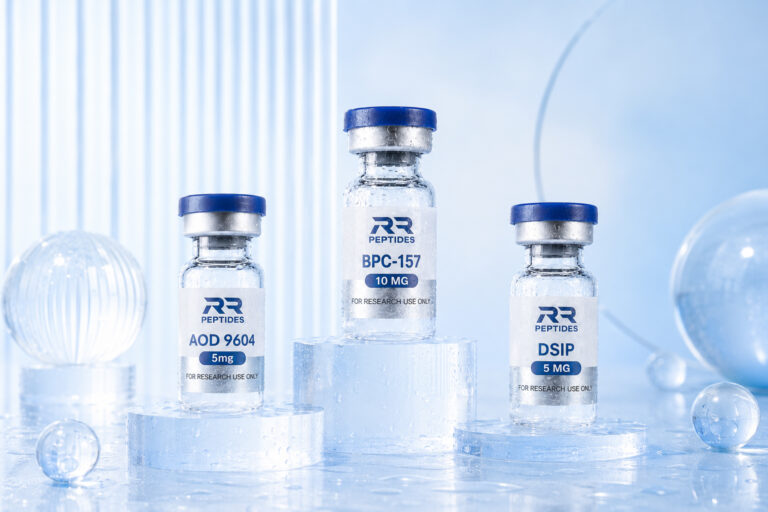
Explore laboratory research applications with BPC-157 10mg.
BPC-157 and Cellular Migration
Cell migration is the directed movement of cells through a biological environment. BPC-157 tissue repair research requires context. Because migration can be measured quantitatively, it represents an important area of BPC-157 tissue repair research.
Cell-based experiments allow investigators to isolate variables that are difficult to control in an intact organism. Researchers can specify the cell type, culture environment, exposure conditions, observation period, and measurement method. This makes cellular systems useful for hypothesis generation and mechanistic investigation.
Cellular migration models
Scratch or wound-closure assays can be used to observe changes in the movement of cells into a defined gap. Transwell systems can measure movement through a membrane under controlled conditions. Microscopy may provide additional information about cell morphology, directionality, or distribution.
These assays require careful interpretation. A reduction in the size of a cell-free area can result from migration, proliferation, or both. Consequently, BPC-157 tissue repair research using migration assays should include controls and, when necessary, complementary measurements that separate these processes.
Migration and cellular signaling
Cell migration involves coordinated interactions among adhesion structures, the cytoskeleton, extracellular signals, and intracellular communication. Researchers may therefore examine proteins, gene-expression markers, phosphorylation patterns, or other endpoints alongside migration measurements.
A signaling marker that changes after experimental exposure does not automatically establish a direct molecular target. It could represent a downstream response or broader cellular adaptation. Mechanistic conclusions require experiments specifically designed to test those relationships.
The value of BPC-157 tissue repair research in this area increases when cellular observations are supported by multiple independent endpoints. A migration result combined with molecular and morphological measurements can provide more context than a single assay alone.
Limits of cell models
Cell cultures offer strong experimental control but simplify biological systems. They do not reproduce every feature of intact tissue, including systemic circulation, immune interactions, metabolism, mechanical forces, and three-dimensional architecture.
For that reason, BPC-157 tissue repair research based on cellular migration should remain within the boundaries of the model. Cell-based findings can generate hypotheses that later studies may examine in more complex systems, but they do not independently establish tissue regeneration or human therapeutic benefit.
Model feature
Research advantage
Main limitation
Cell culture
High experimental control
Simplified biology
Scratch assay
Visual migration measurement
Migration and proliferation may overlap
Transwell assay
Controlled movement assessment
Limited tissue context
Molecular analysis
Pathway-related information
Association may not prove causation
Angiogenesis in Tissue Repair Models
Angiogenesis is the formation of new blood vessels from existing vascular structures. It involves endothelial cells, extracellular signals, matrix interactions, and coordinated cellular behavior. These processes make vascular responses another relevant area of BPC-157 tissue repair research. BPC-157 tissue repair research depends on endpoints.
Endothelial cell research
Endothelial cells are commonly used to investigate migration, proliferation, and network-forming behavior. Under defined laboratory conditions, investigators can compare experimental and control groups and measure selected vascular endpoints.
A change in an endothelial assay should not automatically be interpreted as evidence of functional blood-vessel formation. In-vitro systems are simplified and may not reproduce the interactions required for mature vascular structures.
Within BPC-157 tissue repair research, endothelial observations are therefore best considered evidence about a specific experimental response. Stronger interpretation may come from combining cellular assays with molecular, tissue, or functional measurements.
Tissue and animal models
Animal models can provide broader biological context than isolated cells. Researchers may evaluate vessel-associated characteristics together with tissue structure, inflammatory markers, or other biological endpoints.
However, animal findings remain preclinical. Species differences, metabolism, injury models, exposure conditions, and study design can influence the results. An observation in an animal model should not be presented as direct evidence of a corresponding human outcome.
Vascular endpoints and interpretation
Different angiogenesis endpoints measure different processes. Researchers may assess endothelial migration, network formation, vessel density, or molecular markers. These measurements should not be treated as interchangeable.
Endpoint
What it may describe
Interpretation limit
Endothelial migration
Cell movement
Simplified cellular response
Network formation
In-vitro vascular behavior
Not equivalent to mature vessels
Vessel density
Tissue-level observation
Strongly model-dependent
Molecular marker
Signaling association
Does not alone establish causation
The interpretation of BPC-157 tissue repair research becomes stronger when studies clearly report controls, exposure conditions, model characteristics, and primary endpoints. Consistent reporting also helps researchers compare findings across laboratories.
Tendon, Ligament, and Muscle Research
Tendons, ligaments, and muscles have different structures and mechanical functions, yet each involves interactions among cells, extracellular matrix, vascular components, and signaling processes. These characteristics create several distinct experimental settings for BPC-157 tissue repair research.
Tendon and ligament studies may investigate collagen-associated markers, cellular organization, tissue structure, inflammatory signals, or mechanical characteristics. Muscle studies can examine cellular behavior, tissue architecture, signaling, and functional measurements. Each endpoint addresses a different biological question.
Tendon models
Tendon research may use cultured cells, isolated tissue, or animal models. Investigators can examine matrix-associated characteristics, collagen-related markers, cellular organization, and structural changes. Mechanical testing may provide additional information about stiffness or load-related behavior.
Biological and mechanical measurements should be interpreted separately. A molecular or structural change may support a biological hypothesis without demonstrating improved overall tissue function.
BPC-157 tissue repair research involving tendons should therefore identify the precise model and endpoint. Findings from an experimental tendon model cannot automatically be generalized to human tissue.
Ligament models
Ligaments have distinct mechanical and structural properties, so ligament studies require their own research framework. Investigators may evaluate matrix organization, cellular responses, inflammatory markers, or functional characteristics.
Animal models can add biological complexity, but translation remains uncertain. BPC-157 tissue repair research involving animal ligaments should be described as preclinical evidence rather than established human therapeutic evidence.
Muscle-related models
Muscle research may examine cellular signaling, tissue structure, inflammatory responses, remodeling-associated markers, or functional outcomes. Muscle biology is complex because several cell populations and biological signals can contribute to tissue remodeling.
The range of BPC-157 tissue repair research means that two studies described broadly as muscle research may actually examine different processes. Reviewing the experimental methods is essential before comparing their findings.
Tissue
Example endpoint
Research consideration
Tendon
Matrix or mechanical measure
Tissue-specific remodeling
Ligament
Structural or cellular marker
Distinct mechanical environment
Muscle
Cellular or functional endpoint
Multiple interacting processes
Animal tissue
Combined tissue measures
Greater complexity but limited translation
Researchers can improve interpretation by documenting the model, experimental conditions, controls, and measurement methods. Reproducibility becomes more informative when studies report these variables clearly.
Explore laboratory research applications with BPC-157 10mg.
Current Findings and Research Limitations
Current BPC-157 tissue repair research remains primarily preclinical. BPC-157 tissue repair research remains preclinical. BPC-157 tissue repair research requires evidence. The research landscape includes cellular signaling, migration, vascular responses, tissue-associated models, and musculoskeletal observations. These findings can help generate biological hypotheses, but they should not be treated as equivalent to established clinical evidence.
One important limitation is variation among experimental designs. Studies may differ in species, cell type, concentration, exposure period, tissue model, controls, and endpoints. Apparent disagreement between studies may therefore reflect differences in experimental questions rather than a simple contradiction.
BPC-157 tissue repair research should also distinguish research involving isolated BPC-157 from research involving blends. A multi-component formulation creates additional experimental variables, so results from a study using BPC-157 alone cannot automatically be applied to a mixture.
Evidence hierarchy
A practical evidence framework moves from molecular assays to cellular models, tissue systems, animal research, and human research where such evidence exists. Each level adds different information and has different limitations.
Evidence level
Main value
Key limitation
Molecular assay
Measures selected molecular changes
Limited functional context
Cell model
Tests controlled cellular behavior
Simplified biology
Tissue model
Adds structural context
Still experimental
Animal model
Provides broader biological context
Human translation uncertain
Human research
Examines human outcomes
Requires rigorous design
The strength of BPC-157 tissue repair research depends not only on whether a result is positive but also on reproducibility, methodological transparency, appropriate controls, and relevance of the endpoint.
Material characterization
Research materials should be documented carefully. Useful records can include compound identity, batch or lot number, stated purity, quantity, storage conditions, testing date, and available analytical documentation. Identity and purity represent different analytical considerations.
A batch-specific Certificate of Analysis can help connect analytical results with the material evaluated in an experiment. Depending on the documentation, researchers may review HPLC or UPLC results, mass spectrometry, measured quantity, batch identification, and testing information.
For BPC-157 tissue repair research, material characterization matters because an experimental conclusion is meaningful only when researchers know what material was evaluated. Documentation cannot eliminate every source of experimental variability, but it improves traceability.
Canadian research context
For researchers in Canada, research-use materials should be distinguished from products authorized for therapeutic use. Availability from a research-oriented supplier or appearance in scientific literature does not by itself establish Health Canada authorization for human therapeutic use.
Canadian research settings may also involve institutional policies, laboratory standards, biosafety requirements, and other regulatory obligations. Researchers should determine which requirements apply to their specific experimental environment before beginning work.
The Canadian context is therefore best considered part of responsible research planning rather than evidence about efficacy. Regulatory status and scientific evidence answer different questions and should not be conflated.
What future research needs
Future studies can strengthen the field by using clearly defined objectives, appropriate controls, transparent reporting, reproducible methods, and multiple complementary endpoints. Research that connects molecular observations with cellular, tissue, and functional measurements may provide more informative evidence.
A strong BPC-157 tissue repair research program should also test whether proposed mechanisms remain consistent across independent models. Reproducibility can help distinguish robust biological observations from findings that depend heavily on one experimental setup.
It is a research area rather than a confirmed therapeutic indication. It refers to preclinical investigations examining BPC-157 in experimental models related to cellular migration, vascular responses, connective tissues, muscle, and other tissue-associated processes.
Is BPC-157 proven to regenerate human tissue?
No. Current evidence is primarily preclinical. Experimental findings from cells or animals do not establish proven human tissue regeneration, efficacy, or safety.
Why is cellular migration studied?
Migration is a measurable cellular process involved in tissue organization and biological remodeling. Controlled migration assays allow researchers to examine movement, adhesion, morphology, and related signaling.
Does angiogenesis research prove improved healing?
No. An angiogenesis assay measures selected vascular responses. A change in an experimental endpoint does not automatically demonstrate complete tissue regeneration or improved healing in humans.
Are tendon and ligament studies interchangeable?
No. Tendons and ligaments have different structures, mechanical environments, and biological characteristics. Findings should be interpreted according to the specific tissue and experimental model.
What factors affect research results?
Model selection, cell type, species, concentration, exposure duration, controls, endpoint definition, analytical methods, and sample preparation can all influence experimental findings.
What should researchers review in a COA?
Researchers can review compound identity, batch or lot information, stated purity, testing date, analytical methods, and measured quantity when available. Identity and purity should not be treated as the same measurement.
What is important for Canadian researchers?
Canadian researchers should distinguish research-use materials from therapeutically authorized products and follow applicable institutional, laboratory, and regulatory requirements. Scientific literature and commercial availability do not independently establish therapeutic authorization.
Can animal findings be applied directly to humans?
No. Animal models provide valuable preclinical information but cannot automatically predict human outcomes. Species differences and experimental conditions can affect translation.
How should a new study be evaluated?
Review its research question, model, controls, material characterization, exposure conditions, endpoints, analytical methods, statistical approach, and reproducibility. Conclusions should remain proportional to the evidence.
Final Research Perspective
BPC-157 tissue repair research covers a broad collection of experimental questions involving cellular migration, angiogenesis, tendon and ligament models, muscle research, and related signaling processes.
At RR Peptides, research-oriented peptide information is presented with attention to scientific context, material characterization, and evidence limitations. Readers can use this framework to distinguish laboratory observations from claims that require substantially stronger evidence.
For anyone following BPC-157 tissue repair research, the most useful approach is to examine each study according to its model, endpoint, controls, experimental material, and reproducibility. This makes it easier to understand what a result actually demonstrates and where uncertainty remains.
As research develops, better-designed studies may help clarify proposed pathways and determine which observations can be reproduced across independent experimental systems. Until then, responsible scientific communication should preserve the distinction between preclinical findings and established human therapeutic outcomes.
Explore more research-focused peptide information and scientific resources from RR Peptides.
Disclaimer:All products and compounds discussed are intended strictly for laboratory and research purposes. This article is provided for educational and informational purposes only and is not medical advice, therapeutic guidance, or instructions for human administration.
3 Comments
The focus on BPC-157 and tissue repair research is quite interesting, especially the discussion of cellular processes involved in tissue regeneration. I appreciate the distinction between findings from preclinical studies and what remains to be established through further research.
I found the research perspective on BPC-157 and tissue repair useful. Looking at the proposed mechanisms alongside the available evidence gives a clearer picture of why this compound continues to be investigated in laboratory studies.
The connection between BPC-157 and tissue-repair pathways raises some interesting research questions. I liked the balanced approach, particularly the emphasis on current evidence and the limitations that should be considered when interpreting preclinical results.




The focus on BPC-157 and tissue repair research is quite interesting, especially the discussion of cellular processes involved in tissue regeneration. I appreciate the distinction between findings from preclinical studies and what remains to be established through further research.
I found the research perspective on BPC-157 and tissue repair useful. Looking at the proposed mechanisms alongside the available evidence gives a clearer picture of why this compound continues to be investigated in laboratory studies.
The connection between BPC-157 and tissue-repair pathways raises some interesting research questions. I liked the balanced approach, particularly the emphasis on current evidence and the limitations that should be considered when interpreting preclinical results.