CJC1295 Research Information
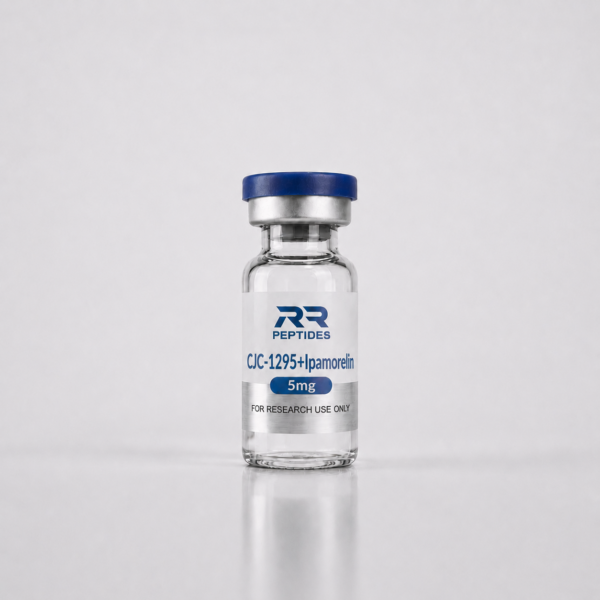
CJC1295 (No DAC) + Ipamorelin 10mg is supplied for controlled laboratory and analytical research. This research material is intended for qualified researchers studying peptide characteristics, receptor interactions, and related signalling pathways in appropriately designed in vitro or other non-clinical experiments.
Laboratory Documentation and Research Use
Each vial is provided with product-specific quality documentation to support identity and purity review. Researchers should follow their institution’s handling, storage, preparation, and disposal procedures. Experimental design, concentrations, controls, and analytical methods remain the responsibility of the qualified research professional.
Browse our research peptide catalog for related laboratory materials. Review indexed relevant research on PubMed.
Analytical Planning
Before beginning an experiment, researchers should document the intended assay, reference standards, negative and positive controls, sampling intervals, and acceptance criteria. Maintaining consistent environmental conditions and recording instrument settings can improve reproducibility across laboratory runs. Materials should be inspected on receipt and stored according to the accompanying documentation. Any prepared sample should be labeled clearly, protected from contamination, and handled only by trained personnel using appropriate laboratory equipment. Results should be interpreted within the limits of the selected model and analytical method. Researchers should also document lot identifiers, preparation dates, equipment calibration status, observations, deviations, and final disposition. These records support traceability and make comparisons across independent analytical runs easier to interpret.
Experimental Design Considerations
Combination-material experiments benefit from a clearly defined hypothesis and a protocol that distinguishes observations associated with individual components from observations associated with the combined preparation. When feasible, the design may include separate comparator groups, vehicle controls, multiple sampling intervals, and predetermined analytical endpoints. Researchers should document the preparation sequence, mixing conditions, final concentrations, sample volumes, container materials, and time between preparation and analysis. These details can help identify sources of variability and support meaningful comparisons between runs.
Analytical instruments should be qualified for the intended method, and calibration or system-suitability checks should be completed before samples are evaluated. Replicate measurements can help characterize method precision, while appropriate blanks and controls can help identify background interference. Raw observations, calculations, chromatograms, spectra, plate-reader outputs, and any processing steps should be retained according to institutional recordkeeping requirements.
Storage and Sample Integrity
Laboratory personnel should minimize unnecessary temperature cycling, prolonged light exposure, repeated container opening, and other conditions that may affect sample integrity. Aliquoting may be considered when it is compatible with the experimental protocol and the accompanying product documentation. Labels should include the material identity, lot number, preparation date, concentration, storage condition, and responsible researcher. Any unexpected appearance, handling deviation, or storage excursion should be documented before the material is used. These practices support traceability, reproducibility, and responsible interpretation of results across controlled research settings.
For research purposes only. Not for human consumption. This product is not intended to diagnose, treat, cure, or prevent any disease.


Reviews
There are no reviews yet.