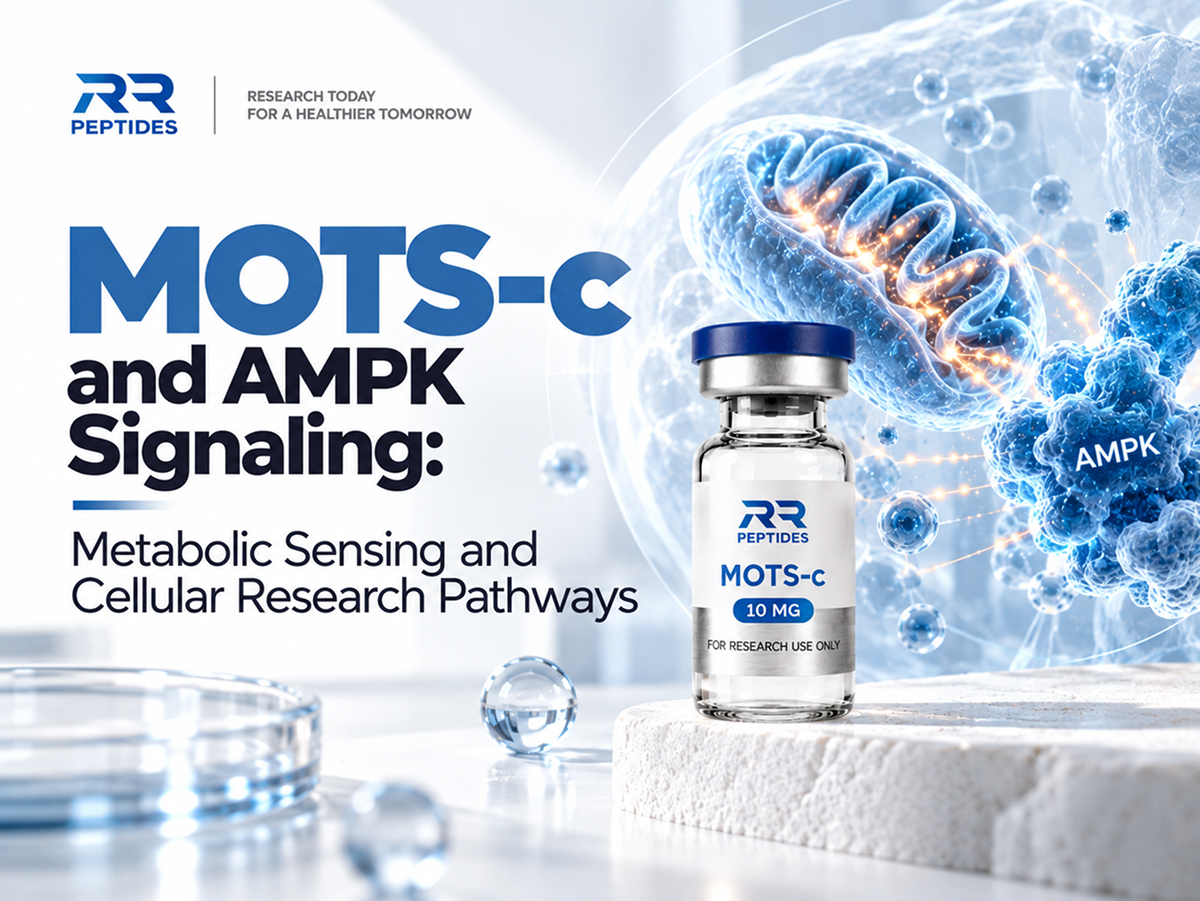
Mitochondria do more than generate cellular energy. Emerging research shows that these organelles also produce signaling molecules capable of influencing metabolic regulation, stress responses, and communication between cellular compartments. Among these molecules, MOTS-c has attracted scientific interest because of its potential relationship with cellular energy sensing.
The relationship between MOTS-c and AMPK signaling represents an important area of mitochondrial peptide research. Scientists are investigating how this pathway influences metabolic adaptation, nutrient availability, and cellular responses to changing energy conditions.
AMP-activated protein kinase (AMPK) functions as a central regulator of cellular energy balance. Meanwhile, MOTS-c is a mitochondrial DNA-encoded peptide associated with metabolic regulation in experimental models. Their interaction offers researchers an opportunity to investigate how mitochondrial signals influence broader cellular processes.
For Canadian researchers exploring mitochondrial-derived peptides, RR Peptides provides access to research-focused compound information and product specifications.
This article examines the mechanisms connecting MOTS-c and AMPK signaling, the cellular pathways involved, experimental approaches, and limitations of current scientific evidence.
What Is AMPK and Why Is It Important in Metabolic Research?
AMPK is an evolutionarily conserved protein kinase that helps cells respond to changes in energy availability. It coordinates metabolic processes by detecting energetic stress and adjusting cellular activities accordingly.
Understanding AMPK provides the foundation for investigating MOTS-c and AMPK signaling within mitochondrial and metabolic research.
Understanding AMPK as a Cellular Energy Sensor
AMPK exists as a heterotrimeric protein complex containing three subunits: alpha, beta, and gamma. The alpha subunit contains the catalytic kinase domain, while the beta subunit supports complex assembly. The gamma subunit contains regulatory sites that bind adenine nucleotides.
AMPK responds to changes in cellular AMP, ADP, and ATP availability. When cellular energy becomes limited, increased AMP or ADP relative to ATP can promote AMPK activation through several regulatory mechanisms.
However, AMPK activity also depends on upstream kinases, cellular localization, and additional regulatory signals.
How AMPK Responds to Energy Stress
AMPK activation involves phosphorylation of threonine 172 within the catalytic alpha subunit.
LKB1 represents an important upstream kinase involved in this process. Calcium/calmodulin-dependent protein kinase kinase 2 can also activate AMPK under certain conditions.
Cellular condition
AMPK response
Metabolic significance
Reduced energy availability
Increased activation
Supports energy balance
Elevated AMP relative to ATP
Promotes activation
Indicates energetic stress
Increased calcium signaling
Context-dependent activation
Connects calcium and metabolism
Nutrient limitation
Adjusts metabolic pathways
Supports cellular adaptation
Adequate energy availability
Often lower activity
Permits anabolic processes
Understanding MOTS-c and AMPK signaling also helps researchers examine how mitochondrial communication contributes to cellular energy regulation.
Why AMPK Matters Beyond Energy Production
AMPK influences numerous cellular pathways, including lipid metabolism, glucose utilization, protein synthesis, and autophagy.
For example, AMPK can phosphorylate acetyl-CoA carboxylase, an enzyme involved in fatty acid metabolism. Additionally, AMPK interacts with regulatory networks involving mechanistic target of rapamycin complex 1 (mTORC1). The connection between MOTS-c and AMPK signaling is particularly interesting because mitochondrial-derived signals may influence these broader regulatory networks.
Nevertheless, AMPK activation alone does not establish a specific biological outcome. Its effects depend on tissue type, experimental conditions, and interactions with other signaling pathways.
Discover a high-purity synthetic peptide designed for advanced laboratory studies with RR Peptides MOTS-c 10mg.
MOTS-c is a 16-amino-acid peptide encoded by a short open reading frame within the mitochondrial 12S ribosomal RNA region. Unlike many conventional signaling proteins, MOTS-c originates from mitochondrial genetic information.
Researchers have investigated MOTS-c and AMPK signaling to understand how mitochondrial-derived peptides participate in metabolic regulation.
The Discovery of MOTS-c
A foundational study published in Cell Metabolism in 2015 identified MOTS-c as a mitochondrial-derived peptide involved in metabolic homeostasis. Their findings suggested that MOTS-c influences metabolic pathways associated with folate metabolism, purine biosynthesis, and AMPK activation.
Importantly, these observations established a mechanistic research direction rather than demonstrating clinical effectiveness in humans. MOTS-c belongs to a broader group of mitochondrial-derived peptides that includes humanin and small humanin-like peptides.
However, these peptides differ in their sequences, biological interactions, and investigated functions.
The Folate and Purine Metabolism Connection
One of the most significant findings concerning MOTS-c and AMPK signaling involves one-carbon metabolism. One-carbon metabolism includes interconnected biochemical processes that support nucleotide synthesis, methylation reactions, and cellular metabolic regulation.
In experimental systems, MOTS-c altered components of the folate-methionine cycle and de novo purine biosynthesis. These changes were associated with increased intracellular concentrations of 5-aminoimidazole-4-carboxamide ribonucleotide, commonly called AICAR.
AICAR is a purine biosynthesis intermediate associated with AMPK activation through its ability to influence cellular energy-sensing mechanisms.
Proposed Sequence of Molecular Events
The relationship between MOTS-c and AMPK signaling can be summarized through the following experimental framework.
Research stage
Observed or proposed mechanism
Scientific relevance
MOTS-c activity
Changes in cellular metabolic pathways
Mitochondrial signaling
Folate metabolism
Altered one-carbon metabolic intermediates
Metabolic regulation
Purine biosynthesis
Increased AICAR accumulation
Energy-sensing interaction
AMPK activation
Increased phosphorylation in experimental models
Cellular adaptation
Downstream responses
Changes in metabolic regulation
Research hypothesis development
Although this framework helps explain published observations, researchers should not interpret it as a universally established sequence across all tissues.
AMPK-Dependent Nuclear Translocation
Research published in 2018 identified another important relationship between MOTS-c and AMPK signaling.
Under experimentally induced metabolic stress, MOTS-c was observed to move into the nucleus. Researchers reported that this translocation depended on AMPK activity. Within the nucleus, MOTS-c interacted with stress-responsive transcriptional mechanisms and influenced gene expression.
However, the precise mechanisms governing nuclear transport and downstream transcriptional activity require further investigation.
What Cellular Changes May Follow AMPK Activation?
AMPK activation can influence several metabolic pathways simultaneously. Therefore, researchers studying MOTS-c and AMPK signaling often examine multiple cellular outcomes rather than focusing exclusively on kinase phosphorylation.
These outcomes may include changes in substrate utilization, lipid metabolism, autophagy, and stress-responsive gene expression.
Glucose Metabolism and Cellular Energy Balance
AMPK contributes to cellular energy regulation by influencing glucose transport and utilization. In skeletal muscle, AMPK activation can promote glucose uptake through mechanisms involving glucose transporter regulation.
Studies involving MOTS-c have reported changes associated with glucose metabolism and insulin sensitivity in animal models.
These findings support further investigation of MOTS-c and AMPK signaling in metabolic research. Nevertheless, improved metabolic measurements in animals do not establish equivalent effects in humans. Researchers must distinguish cellular mechanisms from physiological outcomes and clinical endpoints.
Lipid Metabolism and Fatty Acid Oxidation
AMPK influences lipid metabolism partly through phosphorylation of acetyl-CoA carboxylase. This enzyme contributes to malonyl-CoA production, which can regulate mitochondrial fatty acid entry. Under appropriate conditions, reduced acetyl-CoA carboxylase activity may support increased fatty acid oxidation.
Research involving MOTS-c and AMPK signaling has explored these interactions in relation to metabolic adaptation. However, fatty acid oxidation depends on substrate availability, mitochondrial function, and additional regulatory mechanisms.
Therefore, AMPK phosphorylation should not be interpreted as direct evidence of increased whole-body fat oxidation.
Autophagy and Cellular Maintenance
Autophagy is a regulated cellular process that contributes to the degradation and recycling of intracellular components.
AMPK can influence autophagy through interactions with proteins such as ULK1 and regulatory pathways involving mTORC1. Nevertheless, increased AMPK activity does not automatically demonstrate increased autophagic flux.
Researchers must use appropriate experimental measurements to distinguish autophagy initiation from completed degradation.
Oxidative Stress and Gene Regulation
Mitochondrial activity is closely connected with reactive oxygen species production and cellular redox regulation.
Research suggests that MOTS-c may participate in stress-responsive signaling, including pathways associated with nuclear factor erythroid 2-related factor 2 (NRF2).
The relationship between MOTS-c and AMPK signaling may therefore involve coordinated responses to energetic and oxidative challenges.
Cellular pathway
Relevant molecular components
Research consideration
Glucose metabolism
AMPK, glucose transport regulators
Substrate utilization
Lipid metabolism
AMPK, ACC
Fatty acid regulation
Autophagy
AMPK, ULK1, mTORC1
Cellular recycling
Stress response
NRF2, transcription factors
Adaptive gene expression
Nuclear signaling
MOTS-c, AMPK
Mitochondrial communication
Together, these pathways demonstrate the complexity of cellular responses associated with AMPK activation.
How Is the MOTS-c–AMPK Pathway Studied Experimentally?
Investigating MOTS-c and AMPK signaling requires experimental methods capable of measuring molecular activity, metabolic changes, and downstream cellular responses.
Researchers typically combine biochemical analysis with cellular models and carefully selected controls.
Cell Culture Models
Published MOTS-c research has included HEK293 cells and other experimental systems relevant to metabolic regulation
However, cell culture findings require cautious interpretation because isolated cells cannot reproduce every interaction occurring within an intact organism.
Measuring AMPK Activation
Western blotting is commonly used to investigate phosphorylation of AMPK at threonine 172. Researchers may also examine phosphorylation of downstream substrates to evaluate pathway activity.
Importantly, phosphorylation measurements should be interpreted alongside appropriate loading controls and experimental comparisons.
The study of MOTS-c and AMPK signaling benefits from combining protein measurements with functional metabolic assessments.
Metabolomics and Molecular Analysis
Mass spectrometry-based approaches can identify differences involving nucleotide metabolism, amino acid pathways, and energy-related intermediates.
Investigating MOTS-c and AMPK signaling through complementary analytical techniques can provide a clearer understanding of metabolic responses across different experimental models.
Experimental method
Primary measurement
Important limitation
Western blotting
Protein phosphorylation
Does not establish complete pathway function
LC-MS metabolomics
Metabolic intermediates
Requires careful sample normalization
Gene expression analysis
Transcriptional changes
Does not directly measure protein activity
Immunofluorescence
Cellular localization
Requires specificity controls
Genetic knockdown
Contribution of selected proteins
May produce indirect effects
Animal models
Integrated physiological responses
Limited direct human translation
Investigating Pathway Dependence
Researchers can examine MOTS-c and AMPK signaling using genetic or pharmacological approaches.
For example, reducing AMPK expression may help determine whether a particular cellular response depends on AMPK activity. However, pharmacological inhibitors can affect additional molecular targets.
Research Reproducibility in Canadian Laboratories
Canadian laboratories investigating mitochondrial peptides should prioritize documented methods, appropriate controls, and reliable analytical measurements.
ISO/IEC 17025 provides a recognized framework for laboratory competence, although accreditation requirements depend on the laboratory’s activities.
Researchers should also distinguish research-grade materials from Health Canada-authorized therapeutic products. When exploring MOTS-c and AMPK signaling, material identity, purity documentation, and experimental consistency are essential considerations.
RR Peptides offers research compound information that Canadian researchers can review when evaluating laboratory materials.
Discover a high-purity synthetic peptide designed for advanced laboratory studies with RR Peptides MOTS-c 10mg.
What Are the Limitations of Current MOTS-c and AMPK Evidence?
Although research findings are scientifically interesting, several limitations prevent definitive conclusions about the broader biological significance of MOTS-c.
Understanding these limitations is essential when interpreting MOTS-c and AMPK signaling research.
Predominance of Preclinical Evidence
Much of the foundational evidence comes from cultured cells and animal experiments. These models allow researchers to investigate molecular mechanisms under controlled conditions.
However, their findings cannot automatically establish equivalent biological responses in humans. Further research into MOTS-c and AMPK signaling is necessary to determine whether these molecular observations remain consistent across different biological systems.
Unresolved Molecular Mechanisms
Although studies have identified associations between MOTS-c, metabolic intermediates, and AMPK activation, important mechanistic questions remain. For example, researchers continue investigating how MOTS-c interacts with cellular components and how its effects vary across biological systems.
The relationship between MOTS-c and AMPK signaling may involve indirect metabolic changes rather than a single direct molecular interaction. Consequently, describing MOTS-c as a universally established direct AMPK activator would oversimplify the evidence.
Differences Between Experimental Models
Research findings can vary depending on cell type, peptide preparation, analytical method, and experimental duration.
Additionally, endogenous MOTS-c production may not reproduce every effect observed after experimental exposure to synthetic peptide preparations.
Limited Clinical Translation
Preclinical findings do not establish clinical safety, effectiveness, or appropriate human administration. MOTS-c is not an established Health Canada-approved treatment for metabolic disease.
Therefore, claims about weight management, disease treatment, or human performance cannot be justified solely through cellular AMPK observations.
The study of MOTS-c and AMPK signaling remains valuable primarily for understanding mitochondrial biology and metabolic regulation.
Priorities for Future Research
Future investigations could strengthen the evidence through improved mechanistic characterization and standardized experimental methods.
Important priorities include:
Clarifying molecular interactions responsible for observed signaling changes.
Comparing responses across relevant cellular and tissue models.
1. What is the relationship between MOTS-c and AMPK signaling?
MOTS-c is a mitochondrial-derived peptide associated with metabolic regulation in experimental models.
Research suggests that MOTS-c can influence pathways involving folate metabolism, purine biosynthesis, and AMPK activation. However, the relationship remains under investigation, and its mechanisms may differ across biological systems.
2. Does MOTS-c directly activate AMPK?
Current evidence supports an association between MOTS-c activity and AMPK activation. However, foundational studies suggest that changes in metabolic intermediates, including AICAR, contribute to this relationship.
3. Why is AMPK important in mitochondrial research?
AMPK helps cells respond to changes in energy availability. It influences glucose metabolism, lipid regulation, cellular maintenance, and stress adaptation.
Consequently, AMPK provides a useful framework for investigating communication between mitochondrial activity and broader cellular processes.
4. Can MOTS-c influence nuclear gene expression?
Experimental studies have reported that MOTS-c can translocate into the nucleus under metabolic stress.
This process was associated with AMPK-dependent regulation and changes in stress-responsive gene expression. However, additional research is necessary to clarify its broader physiological significance.
5. How do researchers measure MOTS-c and AMPK signaling?
Researchers commonly use Western blotting, metabolomics, gene expression analysis, and cellular imaging. These approaches can measure kinase phosphorylation, metabolic intermediates, transcriptional responses, and cellular localization.
6. Is MOTS-c approved for human therapeutic use in Canada?
MOTS-c is not an established Health Canada-authorized therapeutic treatment.
Research findings involving cultured cells or animals should not be interpreted as evidence supporting human administration. Regulatory status and laboratory research requirements must be evaluated separately.
7. What makes MOTS-c interesting for metabolic research?
MOTS-c provides an opportunity to investigate how mitochondrial genetic information contributes to cellular signaling.
Its reported interactions with metabolic pathways suggest that mitochondria may participate in communication beyond conventional energy production. These observations support further mechanistic investigation.
8. What remains unknown about MOTS-c and AMPK signaling?
Important questions concern molecular interactions, tissue-specific responses, endogenous regulation, and clinical relevance. Although experimental findings support continued investigation, current evidence does not establish consistent therapeutic outcomes in humans.
Further research is needed to determine how these mechanisms operate across different biological conditions.
Conclusion
Mitochondrial-derived peptides have expanded scientific understanding of how cells coordinate energy regulation and stress responses.
MOTS-c represents an important research subject because of its reported connections with one-carbon metabolism, purine biosynthesis, AMPK activation, and nuclear signaling.
Current evidence suggests that MOTS-c and AMPK signaling may contribute to metabolic adaptation through interconnected cellular pathways.
However, much of the available evidence remains preclinical, and several molecular mechanisms require further clarification.
For Canadian researchers investigating mitochondrial peptides, RR Peptides provides an opportunity to explore research-focused compound information and available product specifications.
By prioritizing reliable analytical methods, appropriate experimental controls, and evidence-based interpretation, researchers can continue exploring the biological significance of MOTS-c and AMPK signaling.
Disclaimer: All products and compounds discussed are intended strictly for laboratory and research purposes. This article is provided for educational and informational purposes only. This article is not medical advice, therapeutic guidance, or instructions for human administration.
×
Subscribe & Get 10% Off!
Enter your email address below to subscribe to our newsletter and receive an instant 10% OFF discount coupon code sent directly to your inbox!
Thank you for subscribing! Your 10% discount coupon has been sent to your email. Please check your inbox!